This episode is a conversation and was not read from a written script, so there is no cited text for it. The automated transcript below is searchable.
Bonus episode
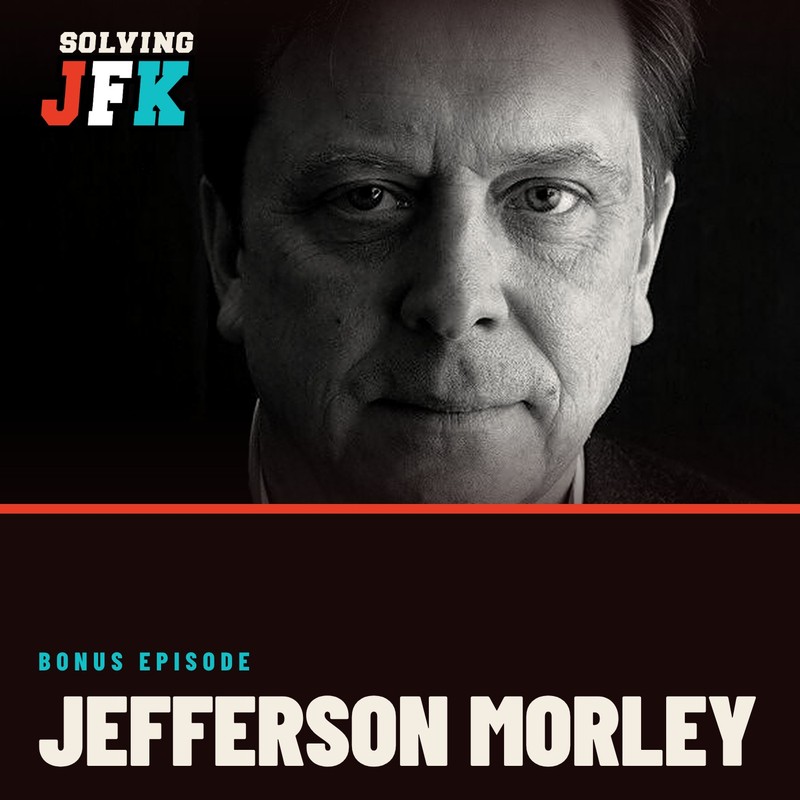
Jefferson Morley
We are joined today by one of the most public faces of the effort to disclose JFK Assassination records, and long-time expert on the case, Jefferson Morley.
If you don’t know Jefferson Morley, you probably have not been following the assassination very closely. He worked as a writer for the New Republic and later for the Washington Post. He has also written for Salon and The Intercept. He is currently on the board of the Mary Ferrell Foundation, which is dedicated to preserving and obtaining all of the JFK Assassination records.
Automated transcript
Machine-generated from the audio and unedited, so names and spellings may be wrong. Tap a timestamp to play from that point.
Speaker 0We're joined today by one of the most public faces on the effort to disclose JFK assassination records and longtime expert on the case, Jefferson Morley. If you don't know Jefferson Morley, you probably have not been following the assassination very closely. He worked as a writer for the new Republic and later for the Washington Post. He also has written for Salon and the Intercept, and he's currently on the board of the Mary Feral Foundation, which is dedicated to preserving and obtaining all of the JFK's assassination records. On top of those achievements, Morley has been very involved with Representative Luna's House Committee Task Force on the declassification of federal secrets, having testified before the committee in April. We'll cover many topics in a wide-ranging discussion with Jefferson Morley coming up next on Solving JFK.
Speaker 2It's more interesting than that they have formally charged the assassination question.
Speaker 3I guess the hat of the president managed to plead on board. It's also a fact in a phone. I was he a member of a conspiracy. The mission answers acted in a long-up-up-up-up-up.
UNKNOWNI'm a new person. Good morning.
Speaker 0Hey real quick, before we get started, I just wanted to let you know that we did have some technical difficulties and some Zoom lag going on during this interview. But overall, it's not too bad. Just wanted to apologize for that and without further ado, here's the episode.
Speaker 4Jefferson, thank you for joining us. Appreciate it, man. Thanks for having me, man. I'm looking forward to this discussion. A lot has been happening on the JFK front this spring. things kind of subsided in August when Congress was out of session and now things are picking back up. So it's a good time to talk about all of this because of what's happening.
Speaker 0For sure, and there's a lot to talk about in terms of just things that have happened in the last couple of years with the, you know, declassification of records and this congressional committee, but you also have a whole career. You have a whole, you know what I mean? Yeah, we're working on this. So we'll cover a few different things and I also wanted to say from the top. that, you know, you and I didn't know each other before, I've been sort of a fan of your work as before I started my project and certainly was aware of what you were doing and just wanted to thank you for the hospitality and, you know, kindness you've shown to me even though you didn't have to so appreciate that.
Speaker 4Well, man, as soon as I became aware of your work and I wasn't like a huge podcast consumer, I just saw, you were super serious about getting this right about looking at every corner of it in a judicious thoughtful manner. So, you know, what I, what my response to you was my response to anybody who's doing quality work was as, you know, yeah, let's talk.
Speaker 0So, given you a long record of working on the case, like I said, lots of questions, so let's just kind of start from the beginning, what are the core facts that initially led you to believe that, you know, this case was something more than just what the Warren report says, slash, how did you become interested initially in this case?
Speaker 4You know, in the 1980s, I became interested. in the case and began reading a lot of books and the first thing that struck me was how few of them were any good in kind of journalistic or historians terms although the information was very interesting but you know I felt like In the 80s, you know, the assassination was 25 years in the past. I was working at, you know, weekly publications like the New Republic or the nation. And then at the Washington Post, Daily Newspaper. And like I just felt like I had nothing to add. you know, so I was interested, didn't really know what to think, changed my mind all the time, but since I had no obligation, I was just thinking about it at curiosity. So the first thing that happened was, Albert Stone's movie came out in 92 and Congress passed the JFK Records Act that fall. and President Bush signed it into law. And so in early 1993, President Clinton took office and appointed what the law called for, the assassination records review board.
Speaker 4And I realized that, you know, this law was gonna result in the declassification of a huge amount of material that nobody had ever seen before. And then I thought, well, there is something new. I'll have something new to report on because there'll be something in those records. You know, the whole conspiracy debate, I mean, you know, there's a hundred conspiracy theories out there. Well, only one thing happened in Dallas, right? So going in, you know that 99% of the theories are wrong. So what's your chance of picking the right theory? I mean, the odds were 99% against me. So I decided, I just wasn't going to play that game. there was no point. I was looking for new stories about related to JFK's assassination. And especially, I knew a lot about the CIA. I've been covering the CIA in the Civil Wars and Central America in the 1980s in Nicaragua and El Salvador. And I learned how the CIA works, how it's integrated into U.S.
Speaker 4foreign policy, how it's record-keeping system work, freedom of information act. So I had a lot of knowledge about the CIA going in, and I thought there's going to be stuff in those records. And absolutely, from the beginning, anybody who knew something about CIA records understood that what the JFK review board was releasing in the 1990s, was extraordinary and unprecedented look at how CIA operations of all sorts worked in reality and how they were recorded, how they were memorialized, how they would kept secret. So I had a lot to work with as soon as the JFK review board got going. And so that was really when I began to think, I can report on this story and report new things and stay away from the old conspiracy moraz. I didn't know who killed Kennedy. I still don't know who killed Kennedy. I think that's the only honest response to the records that you can have. I was wary about coming up with a theory.
Speaker 4I mean, I had a lot of theories. It could have based on the record. It could have happened a lot of different ways, including maybe, The official story was correct or correct largely, but incorrect in other ways. So with all of that in mind, I just began doing reporting and reporting on what was in those files, what is in those files. And I never imagined that, you know, At that time, they said, well, the CIA can release all this stuff, but they can post-pone other things, you know, 25 years in the future. So that seemed impossibly far in the future at that point. I thought, well, you know, we'll see what happens. So I started doing that and, you know, wrote a few pieces for the Washington Post. And, you know, just it was such a fertile territory that, you know, there was no reason not to pursue it. At that time, I remember at the post, I would say to people, people were wary of JFK's conspiracy theories.
Speaker 4They thought it was all a sense or madness, and I said, look, we don't have to do conspiracy theories. There's a lot of new information here, and people are going to be really interest. This will drive, we didn't have the phrase drive traffic back then. The internet was just starting, but this will attract readers. A lot of people at the Washington Post were like, well, we don't want those kind of readers. And they didn't believe it, you know, that's just for crazy be that that's not something people interested. Well, once we had the internet and I went to Washington Post dot com early on in 2000 as the foreign editor, a world news editor, and we could measure right away how a story did. And if there was a JFK related story, you know, it got great traffic. It got a lot of readers. And so my hunch that this subject would attract readers was, in fact, empirically correct, but we could never prove that until you had until you had the internet.
Speaker 4And it's definitely true. And it's, you know, true to this day when I, when I did the, you know, it was in the, New York Magazine did a story about my JFK work. You know, it was the second most red story of the year, you know. So there's the reader interest. And so for me, as a journalist, it was like, you can always take this story to the bank because you're gonna have readers.
Speaker 0You did write some stories on the JFK assassination records for the post. You actually wrote some stories on that topic.
Speaker 4Yeah, so one of the names that I found in the records when they were declassified was Jane Roman. And so I would go through the records, look for the names of real existing CIA people and look, you know, figure they might still be alive 30 years later and find them. And Jane Roman had turned out with senior Hey, to Jim Angleton, and she lived about two miles from me in Washington. So I went with John Newman and we interviewed her. So that was a story that I did. I also did a story on Wind Scott, the CIA station chief in Mexico. Oh, I did a story for the style section. That turned into that eventually became my first book, our man in Mexico. So yes, I did do some JFK reporting for the post.
Speaker 0So what was the, like, culturally, within the post was this viewed along the lines of like aliens? I mean, it was, was it a tiny much? Pretty much.
Speaker 4And, you know, it was like, oh, come on, you know. And, I came in, and I remember when I proposed the Jane-Rome story, and some people, you know, who's this woman, you know, who's some secretary? What do we care? And David Ignatius, the very well-connected Washington Post columnist. He was then the foreign editor. And he said, no, no, no, Jane-Rome is very important, you know, and that whole argument, just like evaporated, right? Because there was obviously important information there, you know, and this idea, oh, it's just space aliens, tin hats, stuff, anybody who knew anything about the CIA knew that argument was a non-starter. So I did have on trade to the post in terms of like, I knew what I was talking about, and I, you know, wasn't making things up. But yeah, you know, people didn't want to hear it. They were very wed to the Warren Commission. They didn't want to investigate. It was too difficult.
Speaker 4And it is, to this day, it's a very difficult, psychologically destabilizing subject. Because when you realize how, I mean, let's leave aside the whole conspiracy question. When you realize how the president's assassination happened and how it was handled within the government, It's an appalling, atrocious story that does not reflect well on our institutions. No matter what you think about who was responsible. But especially if you don't believe the official story. And so it's like, do we have to get into this? It doesn't make me feel good. And that's true. It doesn't make you feel good. But that's not a reason not to pursue it.
Speaker 0Right, right. Yeah, ontological shock when you things are not the way they were. So on you know, there's a lot of first generation researchers, the, you know, just sad Thompson's, the Mark Lane's, the pen Jones, all these kids, Sylvia Mars, one of my favorites, and that, in they made their contributions, but in terms of second generation researchers, people who weren't there, this Jane Roman story with you and John Newman, is to me one of the biggest pieces of evidence in the case that there's something going on and that there's something going on specifically with Oswald more than just them watching him because he was in the Soviet Union specifically. So I wanted to just jump into that a little bit and kind of, yeah, thanks for coming here. Yeah, good.
Speaker 4When I found Jane Roman, through some property records living in DC. I did not understand how important she was. I mean, I knew she was a CIA officer and I knew that she was at a rank where there weren't many women at that time, but as assistant to Angleton, she was so not important. I actually didn't know how important she was, and especially I didn't know how important Angleton was. I had no idea that Angleton had been controlling the Oswald file for four years before that interview. So you know what Jane Roman said was it did open a door, you know, it was like, You know, this business, oh, this guy came out of nowhere and he killed the president. I mean, in 190-minute conversation, Jane Roman, forever negated that argument. He was not no one. They were, they were paying attention to him. Kean interest was her phrase. held on a need to know bases. I mean, he was the object of high-level national security intention, shortly before the president was killed.
Speaker 4So no matter what you think, that was an important story. And what we've learned since then is a lot more detail about that, you know, who had the keen interest, Angleton, you know, where they reading is male. You know, we never asked because we didn't we had no idea that Ruben Fron had been reading Oswald's mail shortly before Jane Roman received cables about him. I mean, so over the years we've added a lot of granular detail. about the events of 1963, in particular the CIA eyes on Oswald. And so, that original story about Jane Roman becomes the foundation for the whole story of the CIA and Oswald.
Speaker 0Yeah, because the Jane Roman is really a part of the dual CIA and FBI turning off their alarms on Oswald sort of story on the FBI side. We got Marvin Giesling who has a fun name. And the sequel died. Jane Roman is the one who, you know, she sends, uh, Mexico City station on October 10th, that the latest information they have is just that, oh, as well as in the Soviet Union. But six days earlier, she, uh, got a cable that talked about Oswald getting into a fight with the DRE in New Orleans and she did not send that information on and she missed represented that it was the most recent information. So the CIA station.
Speaker 4That was one of the most startling revelations of the story was we had the October 10th cable. that has her name on it in draft, so she had drafted it about Oswald, and she says, our latest information is from June of 1962, she received and signed for the FBI report on Oswald's arrest in New Orleans six days before that. Okay. So that wasn't a mistake. That was an intentional choice, right? We're not going to talk about what this guy is doing with our favorite Cubans and New Orleans. And at the same time, you point out Marvin Giesling, senior FBI agent in charge of watching suspicious characters, people regarded as suspicious by Jay Agrohover, makes the very bizarre decision to reduce scrutiny of Oswald. He takes his name off of what's called the Security Index. And the Security Index was a procedure within the FBI, which if your name was on there, and the Security Index was distributed to all FBI officers.
Speaker 4If there was a name on there, and anything in your district, Atlanta, Boise, New York City, wherever, if that person was arrested on a DUI, whatever, if they came to your attention, you were supposed to notify headquarters. That was the purpose of the security index. And it made sense that Oswald was on it as an ex-defector you would want to know, was he working in a secure facility, was he in contact with communist agents, etc. It made sense for him to be on the index. What's extraordinary, and this will get that what Jane Roman was doing was on the day that Jane Roman wrote that cable, or drafted the cable, and her boss has approved it. Don't forget that. It was not her work alone. Um, on that very same day, Marvin Giesling takes Oswald's name off the security index. So the CIA says, don't worry about this fellow Oswald. We don't know much about him, but he's maturing since he came back from the Soviet Union.
Speaker 4And on that same day, the FBI saying, we don't really need to watch this guide more closely. That's an extraordinary, and then six weeks later, Oswald killed the president. And let's assume for the argument that he did. If that were true, then those events on October 10th were part of the breakdown of security in Dili Plaza, committed by senior FBI and CIA officials. So that cable is very important and Jane Roman's comments, which were actually candid and not deceptive, you know, really help us understand what was going on.
Speaker 0But the official story, is that. So if you believe us, what did it alone, and you're, you know, I'm just trying to think of what the counterpoint would be to what appears to be quite a coincidence of the FBI and CIA pulling the, basically pulling the goalies at the same time. The counterpoint as no, it was just a mere coincidence. Is there a counterpoint for how they could have done it at the same time?
Speaker 4You know, this is where we're getting to the need for a new narrative about JFK's assassination. Because if the official story is true that Oswald killed the president, this, these inexplicable lapses in intelligence, collection around Oswald need to be explained. And they're not explained anywhere in the record, right? The Warren Commission didn't know about this. Um, the October 10th cable was not shown to the Warren Commission. Dickham's summarized it for the Warren Commission, but he did not show it to them. So the Warren Commission didn't know. But six top CIA officials had said, Oswald was maturing in October 1963. We didn't get that cable until 1993 when we went to go interview Jane Roman. So yeah, the official story doesn't really have any explanation for it. It was like, oh, we knew all about that fellow Oswald. We didn't take any action about him, and there was no need, and nobody, everybody did their job just fine, and the president died, and we're really sorry, Mrs. Kennedy, but don't blame us.
Speaker 4You know, that story is now ridiculous, okay? The CIA doesn't have a defense. They're handling of intelligence about Oswald before the assassination. If Oswald killed the president was atrocious.
Speaker 1Bye-bye.
Speaker 0yeah yeah no doubt well let's uh let's move on to just quickly I want to touch on some of your books that you've written uh one one type red is the ghost right here behind uh look on James Angleton which I will be I'll be honest I read this before I started the podcast so I have not found your book and given it the proper treatment but I will be revisiting it when I get to the CIA I'll put you right here in between I just want to get you to quickly just talk about your books that you've written on the case. So, the biggest takeaway from the ghost, I guess it's all about Anglton. What would you say is the most, maybe, surprising thing about Anglton that people don't know?
Speaker 4Well, when I wrote the book, I thought he was an interesting character. I knew he was an interesting character, which I wanted to write the book, but I didn't know how wide his reach was. You know, when I, the, the take on Angleton was that he was most famous for the mall hunt for looking for a KGB spiles within the CIA and that that, you know, eventually resulted in great conflicts within the CIA. bureaucratic power struggle, a lot of bad feelings, and eventually Anglton kind of lost sway within the CIA by the late 1970s. People felt late 1960s, early 1970s. People felt he had just become too dogmatic in his thinking. But when you got into it, Anglton was really involved in much, much more. And in the book, I call him the most important, unelected. official and an American government in the Cold War, and I think that is true. He had tremendous influence on Middle East policy because he controlled, he was the head of the Israel desk as well as the chief of counterintelligence.
Speaker 4He is the guy who started domestic surveillance in 1959, first with the male surveillance program. H.T. Lingual, and then in 1967 with the domestic surveillance spying on the warrant on the anti-war movement, MHKOs. So he was very involved in the growth of domestic CIA's illegal domestic surveillance activities. He was very influential in Middle East policy. and he was very influential in the JFK story by controlling the Oswald file. And he ran this mobile hunt that was a very important ask, you know, chapter in the history of the CIA. He played a big role in swinging the 1948 election to the Christian Democrats in Italy. He played an influential role in the creation of MK Ultra, the mind control program in the early 1950s. So this was a man who exercised power and influence in many, many different areas. And that was much more than I knew when I started the book. I knew he was an interesting character, but the scope of his influence was a revelation to me as I wrote that book.
Speaker 4And I think That's why my book is newer and has a lot of information that was not available to Anglton biographers in the 20th century with a lot of information that came into public view, a lot of it through the J.O.K. Records, you began to understand how important he was. So that's the story that I tell in the ghost. And the story of the Oswald file is at the heart of it. But it's by no means the only important thing
Speaker 0Yeah, because Anglican's got the Oswald file and we have, you can tell from the routing, you know, where these files are going. So we know that he was, I guess if you could just unpack a little more Anglican's pre-assassination knowledge of Oswald and I guess critics would say, hey, just because he's you know went to his office or his secretary signed off on it doesn't mean you know if his signature is on it he may not have known about it i guess what would you say to the people who say that uh... anglton's pre assassination knowledge of us world if at if any was just uh... incidental and it isn't meaningful
Speaker 4I mean, you can say that it's just another one of those JFK theories that has no evidence to support it. Did Angleton not pay attention to the documents that about a Soviet defector that were delivered to his office? Of course he paid attention to them. The assumption that he was not doing his job, It's just that. It's an assumption for which there is no evidence. Nobody ever said Jim Angleton didn't pay attention to possible violations of CIA confidentiality, or of defectors, or of people who sympathized with the Soviet Union or Fidel Castro. Now, he paid very close attention to those people. And what his colleagues in the CIA said was he was an operational genius. So the idea that he wasn't paying attention to Oswald, nobody who worked with Angleton ever said that. And there's no evidence that it's true. Jane Roman didn't say that. Um, so, you know, that's, uh, that's one point and, you know, the, the, the, the idea that he didn't know that he wasn't paying attention or they collected 42 documents on him over the course of four years.
Speaker 413th State Department, 13 FBI reports, 12 State Department, reports 11 CIA, Memoranda, three newspaper articles and some letters that they had intercepted, OK? Between November 1959 and November 1963, there's only one three-month period where Angleton's office did not have Oswald's home address on fire. Okay, let me repeat that again. Between 1959 and 1963, the CIA had the Harvey Oswald's home address almost constantly in their files over the course of four years. So that's called surveillance, you know, if you elect information on somebody like that over that constant period of time, you are paying attention to them. Now, the question is, why? What's the reason? And the people who downplay this thing and say, the CIA did nothing wrong. You know, yeah, sure we knew all about him, but, you know, Sorry, Mrs. Kennedy, we screwed up, you know, that line, which is not particularly persuasive.
Speaker 4It was Angleton's job, I might, it should be noted. Angleton was the head of counterintelligence. The counterintelligence is the defensive aspect of espionage, right? When a spy service, like the CIA, what do they do? They engage in espionage, the theft of sea crickets. And the engage in covert action, secretly manipulating your enemy for your own ends. Those are two different aspects of intelligence. We're both important in the CIA's scheme of things. Counterintelligence is you're trying to prevent the other guy, usually the KGB, but could be other foreign services from doing that to you. So you want to prevent espionage, you want to prevent covert action, and it is explicitly in the counterintelligence chiefs duties to prevent assassinations. That was Angleton's job as counterintelligence chief, so he failed spectacularly on November 22, 1963. He failed to present the assassination of the president, apparently, by a guy who he had been watching for four years.
Speaker 4So the argument that, you know, well, they weren't really paying attention, doesn't make any difference. That doesn't hold any water. He failed to do his job, So that's what I was trying to do in the ghost, and it's not a JFK conspiracy book. I don't say Angleton was part of a JFK conspiracy. I don't have any evidence about what I do have evidence of is his handling of the Oswald file was atrocious, whether or not Oswald killed the president.
Speaker 0You have critics within the conspiracy, within the community of sort of the official story critics. I'm using the word critic a lot, but the point is, you have people who go, hey, I can't tell who's side he's on or whatever, and to me, I think that the, uh, you can call it the conspiracy, the believers or the critical research community or whatever, I think it's good to have somebody whose mainstream saying the things we know we can prove. You're not, so like, the point is, I think sometimes people want you to be an activist, and you're, you're actually just saying what you, what you know to be true, you're not going to say things that you don't feel of it in shares.
Speaker 4You know, Matt, this is important point because when I got into this, you know, in that Washington Post newsroom, I saw the debate about Oliver Stone's movie, take place, you know, among people who are trying to decide how to cover it. This is in 1992, 1993 when I first started there. And it was bitter, not only was the argument bitter, but it was extremely ignorant. and the people talking didn't know what they were talking about. And so I decided early on, but if you want to go far in this, you want to keep at this, right? You need to only state things that you know are true for sure. Because as soon as you start arguing, well, this must be true, where I hope this is true, where I wish this were true, where somebody said this was true, but you can't prove it, then you're going to be involved in one of those arguments that is bitter and ignorant. So, I tried to restrict myself to statements that I could prove were true.
Speaker 4So, The second point is, my entry into this was not through the familiar door called conspiracy or anti-conspiracy. I didn't go in saying, which of those two, what am I going to pick between those two? I went in saying, what can I say about CIA operations in 1963 that is interesting and true? because that's what was in the new JFK file starting in the 90s. And so that's what I did. And the conspiracy debate, that's fine. It's fun to talk about by me a couple of beers. We'll go to the bar across the street. And I'll spend a few conspiracy theories for you. You know, but that's not something I'm going to write about. Why would I write about it? So that's, you know, and that approach was that led to my CIA books, which the three CIA books, the trilogy of spies, which the ghost is the second one. The first one is our man in Mexico. The story of when Scott, the CIA station chief in Mexico. The ghost is the second in the trilogy about Jim Angleton.
Speaker 4And the third Scorpion Stance is about Richard Helms, the CIA director. None of these books is JFK conspiracy book, but these three men were all deeply involved in the JFK story in different ways. So these books give you a look at What did the assassination look like to people inside the CIA? What did it look like to win this guy? What did Jim Engelton think? What did he tell him? Because the answer to that question is a hell of a lot more interesting than what's Jeff Moreley's conspiracy theory? You know, I was intelligent enough to know nobody gives a damn about your conspiracy theory. You know, so don't even go there, don't start. And so I never did.
Speaker 0Right now, yeah, I'll have to pick up our man in Mexico and Scorpion's dance. I'm looking forward to reading those, especially scorpions. Scorpion's dance is a lot about Richard Holmes, right?
Speaker 4Yeah, so, you know, when Scott is in Mexico City, so he's overseeing the surveillance operations that pick up Oswald and he has a lot of questions and, you know, worries about what was going on, which he eventually expresses and he did not believe the Warren Commission, let's just leave it at that. Helms is very involved in the events of 1963, but the book really focuses on the afterlife of JFK's story in the upper reaches of the US government in the late 60s, and Helms is very involved in that, and right up through the Watergate period. And so, and especially in his dealings with Nixon, and this is the kind of the revelatory part of Scorpion's dance, Nixon does not believe the CIA on JFK and he's pressuring Holmes for all four years of his first term. Nixon is pressuring Holmes for documents about the Bay of Pigs. and he sends John Aerolycman over to CIA headquarters every six months and tells him God damn it get dick Helms to give us that Bay of Pigs reporter and so Helms goes I mean Aerolycman goes to the CIA and Helms the ever the courteous gentleman receives him and makes lots of promises and Aerolycman never gets anything
Speaker 4And so, Erlinman finally goes to Nixon and says, I can't, I can't get anything from this guy. So Nixon in 1971 summons Dick Helms to the Oval Office and they have this conversation. Where Nixon is really leaning on, I want that I want these biopids reports, Dick. I remember I really go, or, you know, and you can hear on the tape, you can hear Nixon growling, the very Erban Helms, you know, playing off of him. And, and Helms is like, why this happened, Bay of Higgs happened 10 years ago. Cuba was not an important issue in politics. And Helms is pushing back, why does this matter? And you hear Nixon on the tape, the Husha John Angle. That's what Nixon says. That's what he was interested in the Bay of Higgs report from the CIA, the Husha John Angle. So, Nixon, that can only be a reference to Kennedy's assassination. He didn't believe, and he wanted to know more about the Husha John Engel and was pressuring homes to do that, Helms resisted.
Speaker 4That was October 1971, so eight months later, the Watergate Birdlers are arrested, Howard Hunt is on the lamb, James McCord, a personal friend of Helms is in jail. And Nixon comes and Nixon wants the CIA's help to shut down the Watergate investigation. And so he sends Bob Haldeman, his chief of staff, to go meet with Helms. Nixon can't bear to do this in person. He has his henchmen do it. So Haldeman goes in there and says, you've got to play ball with us, Mr. Director. We want some help, shut down this FBI investigation. and Helm says why he says, well, if you don't do it, you're going to blow the whole Bay of Pigs thing. Now, Helm's surely remembered his conversation with Nixon eight months earlier, where the Bay of Pigs was kind of a coded reference to his real interest, the Husha John Angle. And so, when Haldeman says that to Helm's in June 1972, a week after Helms knows he's being blackmailed by the president he's saying if you don't help me here something bad might come out about you guys in the and JFK that's what you it's gonna blow the whole bay of pigs thing that was his coded language
Speaker 4Helms knows he's being blackmailed, and he blows up on the spot, because he's not going to be blackmailed, and Dick Helms is very poised, controlled man. It's one of the very few times anybody can ever remember him shouting, and he says, this doesn't have a damn thing to do with the Bay of Pigs. because he was threatened, and Nixon was threatening it. It was pure Nixon blackmail, you know, hardbook, dirty politics, and Helms has a lot to hide, right? But Nixon doesn't know that Jim Angleton had 194 page file on Lyrivi Oswell, but Nixon knows that he's pressuring. He's hitting a very sore spot, and he can use that to manipulate the CIA and get what he wants. Now it didn't work, and Helms and Nixon, at that point, have a falling out, and six months later, Nixon fires him as CIA director because he couldn't. He wasn't going to do his bidding that he wanted, but that is the afterlife of the Kennedy assassination.
Speaker 410 years later, is still a very sensitive subject between a CIA director and a president.
Speaker 0So, yeah, I think, you know, everyone's seen Oliver Stone's JFK, but I only just recently for the first time saw Nixon, and it sounds like Nixon, against dance, maybe there was a go wall together. Read the book. Yeah.
Speaker 4No, they do. And the conversation, what you should do is watch the directors cut of Nixon, which is like 10 or 15 minutes longer, and it's got a lot of scenes added that were cut. The studio wanted to move you to be shorter, but I'll tell you a little back story there, man. So when they're filming Nixon, There's a scene in the script between Nixon and Helms who was played by Sam Waterston, great actor, and Nixon is played by Anthony Hopkins, another great actor, and in the scene, which was based on that conversation that I just told you about, the Husha John Engel, the screenwriters, I could tell, had used that real life exchange to fashion this fictional scene between Nixon and Helms, which like Nixon intended sort of suggested that the CIA might have had a hand in Kennedy's assassination. Well, Dick Helms, master spy that he was, retired as CIA director, had his ways of getting his hands on things.
Speaker 4He got a copy of the script. And he writes a letter to Stone, which Stone later shared with me. And he says, you know, his lawyer from a high-powered Washington firm says, if you push that, you know, seen in the movie, you know, we're going to sue you for libel, because it's the president never blackmailed. The director never blackmailed the president. So quite literally, a specific reference to a true historical incident. And and threatened to sue, um, stone told me that he cut the, he cut the scene from the theatrical release. because they had to get it down to two and a half hours, and that was, you know, but he said he wasn't affected by the lawsuit. Now, the stone might not have been affected by the lawsuit, but the movie studio probably was. But anyway, it didn't come out. That scene does not appear between Sam Waterston and Anthony Hopkins. That does not appear in the theatrical release, but in the,
Speaker 4in the director's release, he restored the scene and Helms never sued him, and it is one of the best scenes in the movie in terms of evoking both Helms and Nixon.
Speaker 0Yeah. Yeah. Well, hey, I want to move on to your your lawsuit against the CIA. Yeah, versus the central intelligences agency, pretty, uh, I mean, that's kind of, you know, just when you found out you were going to be suing the CIA and you're the name plaintiff. Did that feel like you have to update your resume that day? Because you're like, TIA one of the things I've done in my life. I mean, what I guess I know that it's about the Joe needy's files and we're going to go talk about Joe needy's more here just a little bit, but I guess I'm more curious right now just about like what was it like personally to to sue the CIA and that whole journey?
Speaker 4You know, it maybe it wasn't a good career move in the short term, but because of these fall statements that the CIA had made to the JFK review word about Joe Anettis, I mean, I thought it was a story. It was a really good story about how the CIA obstructed the house select committee investigation. It wasn't a conspiracy story about what happened in 63. It was a story about a CIA cover up. And I couldn't get the post interested. I had a draft of a story. I showed it to senior editors, people liked the reporting, but the subject was too sensitive. And so I asked Steve Carl who was then the managing editor of the post. I said, well, would you support a Freedom of Information Act request and then lawsuit to obtain certain records, right? So this isn't a theory. We just want to get some government records that are not in the public record. And collectively, the decision in the news room was no, we're not going to do that.
Speaker 4Because I think nobody ever said this to me, but The leadership of the Washington Post at that time did not want to be seen in public as suing the CIA for JFK assassination records. I think that people thought, oh, that's a conspiracy theory and we're above that. We're not going to do that at the Washington Post. And I said, well, there's no conspiracy theory involved here. So that objection is irrelevant. There's only some secret records that we're trying to obtain by the Freedom Information Act, something Washington post reporters do practically every day. So instead of looking at this as some, you know, hot button JFK conspiracy issue, why don't we tone things down and just say, this is another records request because these are records that the public deserves to have. Well, needless to say, that argument did not prevail, although I think it was a good one, and I think it has been proven to be a good one.
Speaker 4So as we went forward, I found a lawyer who was willing to take the case on a contingency fee basis. Meaning I didn't have to put up any money in advance. The way the Freedom of Information Act works is if you sue the government for certain records which they refuse to give you and then you appeal and you win the records then in that case the government has to pay your court costs, right? It's a way of ensuring that the government conforms to the law because if they take a stand that the courts throw out it's going to come out of their budget. So Jim Lassar is a Freedom of Information Act attorney in Washington. And he agreed to take the case on a contingency fee base. So it was no money out of my pocket. All I had to do was supply statements for the litigation, documents to support the arguments, that sort of thing. And I was glad to do it. I mean, I knew other people who had sued the CIA for records.
Speaker 4I had friends at the National Security Archive at George Washington University where they pretty much sued government agencies on a weekly basis under the Freedom Information Act. So, you know, to me it wasn't that all that out of the ordinary and, you know, given the stakes, I thought, well, yeah, this is definitely worth doing. So, so I liked it, you know, I mean, it wasn't pleasant sometimes, the CIA people could be quite nasty in the few meetings that we had, you know, they're added to what, you know, like how dare, how dare you bring this up in our presence. And I would say, well, you've got all these documents on Oswald, so that's why we're bringing it up. That's surely relevant and they were, the what was the what was the fruit of that lawsuit what did you end up getting out of that lawsuit on your needy's so there was a bush appointed judge Richard Leon who threw the case uh well let me give you the chronology exactly my file the case in 2003 a year later the CIA sent me a little package of material about maybe a hundred pages of things from joe and needy's personnel
Speaker 4not very revelatory. So we appealed, we said, look, we asked you to search this office, that office, this type of record, that type of record. You haven't done those type of searches. And in December 2007, a three judge, a pellet court in Washington, D.C., unanimously ruled in my favor and said that the CIA had not fulfilled its obligations under the Freedom of Information Act and they had to do more searches and provide more records. And so, in August of 2008, I got 500 more pages, and there there were three, at least three, very significant. nuggets of information, okay? One was that Joe and Edis had a residence in New Orleans. There were two travel forms that were filled out by CIA officers when they traveled, basically like next of kin information, right? You're out in the field, you're doing dangerous stuff. If something happens to you, who do we contact? And so Joe and Edis filled out this.
Speaker 4These forms, and in there, Well, Joanie's was a branch chief of covert action in Miami, but we never knew before then that he had actually worked in New Orleans, which is where Oswald was, you know, for much of 1963 before the assassination. So, that raised the possibility even more that Joanie needs knew something about Oswald, because he had actually worked in that city. Okay. for his handling of what he did in 1963 with the Cuban students who politicized Oswald before and after the assassination. And for his time as liaison to the House's Select Committee in 1978, his second appearance in the JFK story, we learned in 2008 that he had gotten a medal for those two assignments and the citation for the metal, cited his work in the domestic field. And Miami was his only domestic assignment, and at headquarters, and his job as liaison to the JFK investigators from the House Committee, that was his top headquarters assignment.
Speaker 4So he had clearly been given this award in part for his handling of JFK issues. That was the second thing, third thing, there were eight photographs of Joe and Edies in there. And so then I could take that photograph to the men who had worked with him, in Miami in the early 1960s and says, and said, is this the guy who you worked with, who you knew as Howard? And they said, yes. So the appeal of in morally VCA revealed a whole lot more about joining these all of which drew him closer into the JFK story. So those were significant revelations. Now, you know, any one of them is that a smoking gun proof of a conspiracy? No, nobody said it was. We're not looking for a smoking gun. We're looking to understand what was going on. So that whole smoking gun argument, the more you hear it, the more you realize it's a reflex. And it's kind of a bad faith. It's like, don't tell me about new information because I'm going to rule it out instantly.
Speaker 4It's the sound of a closed mind is what that argument is. Don't confuse me with new facts.
Speaker 0Right. It's a putting the onus on your on your opponent to prove their entire argument with a single document while you are not even attempting to defend the reasonableness of your inference. See, Yes, the Joe needy's files do not definitively prove of whatever the CIA killed the president, okay, or even or even definitively prove We'll get into it here in a second. You know, they don't even definitely prove that that you know, Joe needy specifically told bring air to go contact Oswald. Okay, but What would a reasonable person say, given boom, boom, boom, we lay all the evidence out, it's just a reasonable inference. And I think some people, they're just not prone to make what I would call is the more reasonable inference, perhaps because of other predispositions. I don't who knows, you know, everyone has a different opinion.
Speaker 4Well, you know, I mean, yeah, the first thing is where's the smoking gun proof that Oswald did it? There is none, right? Nobody saw him fire that gun. uh... the fingerprints on the gun are we're not validated by the Dallas police department uh... as a lot of people said that gunfire came from a different direction that he couldn't possibly have fired so so there's no smoking gun on hospital and there's no smoking gun on if anybody else was involved on who it was So the question is, what is the totality of the evidence tell us? And as we got in all this more information, you know, the argument, well, that's not a smoking gun. That's a way of saying, I don't want to pay attention to the new evidence because it disturbs my predetermined theory. So I mean a more open-minded thing. And you know, like I said, I did not come to this No, people say, well, that's the exact same thing. No, it's not the exact same thing.
Speaker 4There were lots of CIA operations. There were six CIA operations that touched on Oswald, six codenamed operations, where his name figures in it. None of those is proof of a CIA conspiracy, but they are all surely relevant to understanding the story of how Oswald came to be arrested for killing the president.
Speaker 0I mean, or that's obvious. So let's jump into Joe needy's and the updated Joe needy's file that you recently acquired. So again, I just say critics say that there's not a smoking gun, it's nothing burger. But it's true, there's no direct evidence that Joe needy's direct to bring gear to action with Oswald. But that ignores all these other little tidbits, like for example, Joe needy's wasn't involved in the case at all when he actually was the DRE handler and he's also, you know, the CISliate liaison for the HSCA all of Joe needy's progress reports for 17 relevant months or missing. I found that to be a huge fact. Joe needy's was sent a tape of Oswald debating bring air in his role as the HSCA head and he never mentioned it to the HSCA that he had been sent that.
Speaker 4So, you know, yeah, so, you know, this argument, oh, there's nothing there. I mean, let's go through and look at what's there, okay. So, there's no proof that Joe and Edis ordered the DRE to, you know, publicize Oswell. No, there's no proof, but we do know what happened, right? Joe Anidis was paying the leaders of the DRE $51,000 a month in cash to generate three things, propaganda, political action, and intelligence collection. That's what's in Joe Anidis' job report for 1963. Those were his duties from the Cuban Student Directorate. intelligence collection, political action, and propaganda. So when the DRE chapter in New Orleans runs into Oswald, they deliver on what they're being paid to do on all three counts. They collect intelligence. They send it back to the Miami headquarters. They engage in political action. They confront Oswald on the street. they denounce him, they confront him in a courtroom, they denounce him in a press report, and they generate propaganda, they issue a press release.
Speaker 4So they do all that three months before the assassination, and that's what they're getting paid to do. After the assassination, they use the intelligence they've collected to engage in political action and generate propaganda to say that the man who just killed the president is a Castro supporter, okay? Join these paid for that too. So he paid for these activities and he had no objection when they engaged in them. So He approved it. I mean, there's no other way. There's no other possible explanation. The idea that the DRE did all of these things and Joe and Edis didn't know about it. Well, if his monthly reports which he was required to file, who was required to file a monthly report on these group, on each group every month, if he filed a report and said, you know, I didn't know about this or it wasn't important, So he approved what they were doing. He paid for it. They did what they were paid for.
Speaker 4And he approved of it afterwards. So the idea he didn't know about it. I mean, you can say that, but Dejo and Eddies ever say he didn't know about it? No. And he had every opportunity, right? There's the other thing. If he didn't know about it, when he was talking to the House Select Committee 15 years later, he could have said, God, I didn't know anything about that guy, as well. I knew a little bit about him, but I didn't take him seriously. I figured he was alone, not. There's nothing like that on the record. This is another one of those JFK theories that has no evidence to support it. Nobody in the CIA literature. and many people have written their memoirs. Have ever said, God, you know, we were all over that guy Oswald and we just missed him. Dick Johnson said that in his memoir. You know, nobody in the CIA literature says that. What they say is, we didn't know anything about the guy.
Speaker 4And we know that that story is completely false. Right, they had 194 pages on him. So the argument that, oh, there's no smoking a proof, look, these actions, CIA operations are conceived and executed with plausible deniability in mind. you want to be able to leave a record so that you can plausibly deny your own involvement. And then the purpose of plausible deniability is actually to serve the president so that the president can plausibly deny U.S. involvement in some dirty tricks or whatever this CIA is doing. So, you know, Joe need these actions in 1963 are conceived with plausible deniability And they assume that I haven't fought of the arguments that they're talking about, you know, we have to choose, which is more likely that John Edies was completely ignorant of what his paid agents were doing in New Orleans when they did what he was paying them to do, and that he was completely ignorant, or that he was knowledgeable about that and approved.
Speaker 4I mean, the bulk of the evidence suggests that the latter is true. He knew he definitely knew about open, he was a highly qualified officer who was praised for, and this is the validity of reporting techniques. That's what he was praised for. So this is a guy who reported what his people were doing. The assumption that he was ignorant, it's just an assumption with no evidence.
Speaker 0To me, it looks like they got the guy who knew where all the proverbial bodies were buried to lead the search for the evidence. And he was like, you know, it can't find anything on Oswald and Miami or James Wave or the DRE. So yeah, guys.
Speaker 4You know Matt, the HSA investigators, Gaiton Fanzi, was in Miami, Dan Hardway was in Washington and his boss Bob Blakey was in Washington. They asked Joe Aniti's, it was a natural question, who was running these Cuban students at the time of their confrontation with Oswald? And Joe Aniti's got back them and said, we don't know. And he himself was the answer to the question. So the audacity of that deception speaks to its importance. And this is another thing that the critics, so if Joe and Edees was so ignorant and innocent, why didn't he say so, right? Like the opportunity, he could have told the HSEA. I wasn't paying attention to what those guys were doing in New Orleans, it wasn't, you know, I didn't know about it. I mean, if that were true, he had a great true story to tell. that would have exonerated the CIA and prevented people from me like coming on and saying, well, something else was going on here.
Speaker 4No, he lied his ass off, probably a felony according to Bob Blakey. And the whole story didn't come out for another 30 years. To then turn around and say, Joe and Edis is entitled to the presumption of ignorance and innocence. That's just an expulatory reflex to make sure that nobody says anything bad about the CIA. And so the CIA is pro bono lawyers on social media. And that's what they are. They're making the case. that the CIA lawyers don't have to do, and they're making it for free because that spares the CIA from paying their own lawyers to make these arguments in public. So the CIA's pro bono lawyers sees on anything to excavate their client, the CIA. Sorry, who do you mean CIA pro bono lawyers like, you know, Mike is to cough, Fred Litwin, I, I, I, I, I need Gerald Posner out of that because I respect Gerald's work. Gerald is a good journalist on, has done some very good books on a lot of subjects.
Speaker 4I don't think case closed is a very good book. But Gerald is, you know, I respect him as a reporter. These other people, they're pro bono lawyers. Mike IssaCoff doesn't know. He doesn't know anything about the JFK story. And he's not there, you know, pronouncing, oh, Of course, they were paying attention as well. You know, Mike Issa-Koff has never read the Issa-Koff file. He doesn't even have a copy of it and he's spouting off. And the reason that he spouts off is because he's a, you know, big deal, Washington Post reporter or so he thinks, and, you know, he's right. And if you disagree with him, you're stupid. You know, that's his attitude. You know, it's not very convincing. Nobody's convinced by it. And, you know, and the more evidence it comes out, they're instinctive desire to protect the CIA, exculpate the CIA. You know, they know that it's getting less and less credible. They're trying to stick their fingers in the diet and say, oh,
Speaker 4Don't worry that we had 194 pages on us. Well, that's really nothing. I mean, Gerald didn't mention it in his book and the Warren Commission never said anything about it and nobody's ever reported it in a major newspaper until very recently. But the CIA didn't do anything wrong. Believe us, it's not very credible. And we are groping our way towards a new JFK narrative because these people, have been discredited and anybody who's paying attention to the case can say that doesn't really explain very much, that doesn't get what we're learning. So I think we're making progress, especially in the past year with President Trump's order, and Rep Loona's committee a lot needs to be done, but we're making progress.
Speaker 0Yeah, and I won't only get to that real quick, first I just want to quickly touch on the Mary Feral litigation. So Trump called for declassification generally. Obviously we had the loan a task force separately, but we still have the JFK Records Act on the book. And, you know, I guess, My biggest question for you is, you're on the board, and this is maybe putting you in a tough spot here, but you're on the board of Mary Ferrell, the attorney for Mary Ferrell right now. One of the attorneys, I believe, is Mark Zed, and he has sort of been critical of you on Twitter. I mean, I can unpack that conflict a little bit and it's really fun. How that makes sense as his counsel?
Speaker 4Rex Bradford, the president of the Mary's Feral Foundation, and I am board members. We're trying to figure out what we could do to break the log jam because the CIA had gotten to President Trump and then to President Biden and convinced them to keep withholding JFK records past the the 2017 deadline that was written into the law. And it wasn't a small number of records. When it came to Trump in 2017, it was like 16,000 records still had redactions. And the CIA, most of those were CIA records. And the CIA was insisting that they remain public. And Trump caved, he didn't really care. And he gave the CIA everything they wanted. So they got four more years of secrecy. the question went to Biden in 2021 and he basically did the same thing and so we were like what can we do and so we thought well you know we can sue and so how do we sue the government well Mark Z is a four-year litigator with a lot of experience, and so, and a friend of mine.
Speaker 4And so, you know, we asked him, you know, what would you do? And so we had some brainstorming sessions with him. But he was never, and he had some ideas about how to deal with national archives, and you know, thoughts about how where the record applied and all that, but he was he wasn't of counsel in the case and when he saw where we were going he wasn't comfortable with it. He dropped out. So, you know, now, you know, now he's he's quite critical and sticking to the lone gunman story. You know, I just, you know, I don't think it's warranted. I respect this judgment. I admire his defense of the cops injured in the January 6 riot. But I just, you know, on this particular issue, I don't think he's informed. But I think he's, you know, he's like a lot of people. He's locked in to his position. And he doesn't want to, you know, he doesn't want to change it. Okay. That's fine. You know, I have a different view.
Speaker 0Let me, let me throw one more JFK records that question at you. There's a provision in the act where it basically says that if These agencies knew that this act was about to be passed and it's coming down the pike. If they turned over their records to the National Archives before the act was in effect, then they're outside the purview of the JFK records collection. And I guess my general question to you is, so that's one example of records that may be relevant that we can't really get at. Um, do you think the best approach going forward is continued litigation or more of basically you asking Luna to ask the CIA director to give it to you? Ha ha ha ha ha ha ha ha ha ha ha ha ha ha ha ha ha ha ha ha ha ha ha ha ha ha ha ha ha ha ha ha ha ha ha ha ha ha ha ha ha ha ha ha ha ha ha ha ha ha ha ha ha ha ha ha ha ha ha ha ha ha ha ha ha ha ha ha ha ha ha ha ha ha ha ha ha ha ha ha ha ha ha ha ha ha ha ha ha ha ha ha ha ha ha ha ha ha ha ha ha ha ha ha ha ha ha ha ha ha ha ha ha ha ha ha ha ha ha ha ha ha ha ha ha ha ha ha ha ha ha ha ha ha ha ha ha ha ha ha ha ha ha ha ha ha ha ha ha ha ha ha ha ha ha ha ha ha ha ha ha ha ha ha ha ha ha ha ha ha ha ha ha ha ha ha ha ha ha ha ha ha ha ha ha ha ha ha
Speaker 4You know, the JFK Records Act that were turned over before the board existed, they're not, they're not unknown. They're in the Archives to Facility in College Park, Maryland, and the Mary Feral Foundation captured, Rex Bradford captured. not all of those, but most of those. So those are documents that to be very precise. They don't have what we call RIF numbers, right? The records that were processed by the JFK review board, they took each record and they gave it a unique record identification form number RIF. And so we have RIF numbers for all of those. And we can track JFK, all the JFK documents. There's 319,000 of them. that have different rift numbers. So there are some documents in the collection that don't have rift numbers and they're harder to find and locate. So that's a problem. A second problem that's been identified by JFK researchers, including a couple of lawyers who worked on the early case.
Speaker 4was this question of final determinations and the review board for each record would make a final determination about would it be released or would it be, you know, released in part or or with held in full. And so what Andrew Euler and these other researchers found was they went to the archives found the final determination orders and found that they were basically ignored. And what Once the JFK review board made the final determination decision, then the rest of the government, then it was over, whatever the review board decided, that was the decision of an executive branch agency, and was final, and the agencies had to regard had to obey it. And so what the Trump and Biden orders on JFK records in 2017 and 2022 did was They basically said, well, the agencies can keep withholding this stuff and the whole issue of final determinations. It wasn't even no, so the issue of final determinations is an important one.
Speaker 4The only question, the reservation I have now is, So what do you do about that, right? Like the archives and the review boards should have been more vigilant and said, here's a final determination. This means the document has to be released on this date. But now that that process was ignored or abused, What do you do about it? So when I hear that story, it's like, okay, I have a relationship with Congressman Luna. I can go to or and say, you know, here's a concern. Like, what could we do with that? What would be the action point around that? And I don't see like what you could do. Now, So what litigating around that question, what would it achieve? I'm not convinced that it would achieve anything. To your second point, so do we rely on representative Luna as the CIA for a document? She gets it and I make a public. That's not a solution either. We need to codify a process to find, to locate, and release.
Speaker 4JFK records. And right now, director Radcliffe is being cooperative and representative Luna has been terrific in asking for documents and making sure that they get provided. And we've got, we've got three big examples of that now. So the Carlos Marcello file, FBI file, which had been identified by David Kaiser, a historian who had written a book about JFK. And he pointed that out to me. He said, The JFK review board never saw this FBI file on Marcelo. Can you get it? I asked representative Luna for it. She asked the FBI for it and we got it. Okay, so, you know, that process can work, but it shouldn't be informal like this. There should be a standard procedure. where government agencies, when notified of the existence of JFK records, review them and release them and send them to the National Archives. So, I'm not happy that, you know, with the many ODS file, which I obtained a copy of, and is a public record.
Speaker 4but hasn't been given to the national archives? No, that's not an ideal situation. But I'm not going to sit on a JFK file because CIA has failed to do its job. I'm sorry, I'm a newspaper reporter, and I like to get a scope, okay? And the Ermenio Diaz file. showing that James Angleton was up to his eyeballs in vetting assassins for the CIA in October 1963. That's a scoop. That's a real story. So I'm not going to hold back on that, but we need a better process. And I'm hoping that the house task force in its final report will make some recommendations about legislation to complete the disclosure process that President Trump has helped along a great deal with this executive order, but a lot more needs to be done to make sure that it really works.
Speaker 0Yeah, but because just so the title and the records conversation, the final determination for him is what could be done in litigation. To the extent there are documents where there is a final determination form that says it's supposed to be released and it hasn't been released, you should be able to get those through a rid of mandamus. I mean, like it's pretty straightforward. It's just that there weren't that many of those documents. I think a lot of most of what Andrew found, was documents where they were not released at the time they should have been released, but then subsequently they've been released, so it doesn't kind of mood now. But there are a few documents that have not yet been released and did have final determination dates, I believe.
Speaker 4OK, in that case, where you've got a document that was supposed to be released and still has reductions in it, absolutely. Here's the final determination. This has to be made public, right? And that's what I like about that approach is. Here's a specific document that should be released. Here's the specific reasons legal reasons why it should be released. Please go get it. You know, when you have that kind of specificity right now, we can get results. Now people come along to me and say, well, you know, I need this file of, you know, this guy who was friends with LBJ and there's 17,000 pages, you know, I'm not going to go to Capitol Hill and tell an elected official to tell the CIA to go search 17,000 pages of material. That's not the way Washington works. If you have a specific request, identify a specific record that you know exists. you can get results, and we can get results, and we are getting results right now.
Speaker 4So I'm telling people, you know, you have a specific suggestion of a JFK record, you think should be out there. I will convey that, you know, regardless of your theory and regardless of my theory. I'm not a gatekeeper, I'm a journalist, and I'm interested in full disclosure. If you have a contribution to make to full disclosure, you know, please, let's have at it. Let's get done.
Speaker 0So in terms of full disclosure, these records, how many, so what's the state of the unreleased records? Because we've gotten some of the big ones like you mentioned and then Trump, he disclosed a lot of them, but they're still like about a thousand or so hanging out there.
Speaker 4This is something we're trying to determine at Mary Fairfield Foundation right now. I don't have a good number. I don't have a good grasp of that. We do know that based on, documents that we knew that had major redactions in January and no longer have them. They've done a good job. This is massive declassification. And frankly, we still don't understand that we haven't mastered that the new information. Or only beginning to. There's a lot of information that was made public And this is the direction where my reporting is going because this is another area where even the review board was not informed about certain operations against the Fairplay for Cuba, or they got information and never had a chance to assess its significance. And so there's a lot of information that has come out and has never been seen by all these people who say that there's nothing in there. There's nothing in there because you haven't read the documents, you know.
Speaker 4And you have these posturing reporters like Mike Isakov at Spytalk, who pronounce on JFK records, having never read them, and having no experience in writing about the case at all. But because he's smarter than you and I, he feels free to say that you're stupid if you disagree with him, when in fact he hasn't even read the records. So we're getting beyond that because there are a whole lot of information and the people who are out there saying, there's nothing there, there's nothing there. I mean, they've been saying that for 20 years and you know what, it's boring, it's tiresome and it's it's unenlightening and it doesn't conform with the fact. So we are making progress at getting the whole story, but you know, how much is still This is why we need a process where you can identify a JFK record that's known to exist. There should be a process where you can make that known to the government agency.
Speaker 4They can go look at their records, produce the record, and send it to the archives. So hopefully that is some legislation that comes out of the House Task Force process could do a lot towards both clarifying the situation, eliminating stupid conspiracy theories of which there are many and, you know, restoring public confidence that, hey, we're finally getting the whole story here.
Speaker 0So to that end, let's let's move on to the task force, the task force on declassification of a federal secrets led by Representative Anna Paulina Luna, just a few questions there. I know you were one of the folks who testified on April 1st. I was sitting there in between all of her stone and you behind you guys, the gift that keeps giving. I was like, oh, watching you on CBS Sunday morning news, my kids were like, hey, daddy, there you are. I'm like, that's right. Very good. Anyway, can you just tell me a little bit about sort of how that all came together? And what's your hopes for a word ends up going?
Speaker 4Yeah, no, it's a good story. It's a good story. First of all, I had never even heard the name Ann Apollena Luna until March of this year. And I was reading social media and she had put out a tweet saying, we're going to have a house task force going to have a hearing in Dallas. And we're going to call living witnesses, and we're going to, and she got crucified on social media, like in a way that you rarely see, okay? She put out this tweet, and within 24 hours, she had 10,000 tweets. And I would say, conservatively speaking, 98 percent of them were negative. It might have been 99 percent. I mean, and everybody said everybody, it was unanimous. We don't want to have another hearing just release the bio. So this was obviously not a good move on her part. So when I saw that, We had been, you know, interested in what this task force was going to do, and I contacted her office with the help of a lobbyist friend, and I said, look, you know, if you're going to do JFK files, you're walking into a mine field, everybody's got their eyes on it, there's a million experts out there, half of them are assholes, and you're just inviting trouble if you walk into this field, not knowing what you're talking about.
Speaker 4And she said, well, what should I be doing? So I said, well, okay, here's 15 records that have redactions in them, and why don't you go get them? And so she turned to her aide, and she said, get Radcliffe on the line, and we're gonna give them a list of these documents. And I'm just like, whoa, I've been in Washington a long time for a congressman to take direct action, while I was speaking in relation to the CIA, That showed me that this woman had some nerve. It also showed me that unlike most people in Washington, she wasn't cowed by the CIA. She wasn't intimidated by the CIA. She wasn't trying to flatter or win furry favor with the CIA. She was looking at them as a government agency that had legal obligation to provide records. And she was going to do that. And so we began working together. And you know what? She's a Maga Red. conservative, okay? I read her social media feed. I cringe, okay?
Speaker 4She's also a terrific person and she has been very good on this issue. It's starting from that first conversation when she said All Radcliffe's office and tell him we want to meet him, you know, and she's delivered. She's learned from her mistakes. She's a quick study. She handled those hearings very well. And I point out, you know, I'll tell you, watch the the second house committee hearing on May 20th. There was a bold and was the first witness, okay? A very important JFK witness, right? A CIA agent, a secret service agent, who notified the Warren Commission in the summer of 1964 that there were severe problems in President Kennedy's security detail in the weeks before the assassination. The next day, A Bolden was put under arrest and real-roaded for a crime that he never committed and spent six years in jail. That alone tells you that the Warren Commission and the FBI and the Secret Service weren't interested in a real JFK investigation because they arrested a guy who was going to talk about Kennedy's security detail.
Speaker 4He spent six years in jail. I said when she said she wanted to have live witnesses, I said you really have to have a Bolden. This guy really paid a price for trying to do the right thing. So A. Bolden comes on. He's 92. I talked with his son and his lawyer to help, you know, get him to do this. And of course, there's these technical difficulties, you know, and it's like, here's this old man. He's kind of bent over. He's having technical difficulties. And so Luna handles it very graciously. So I will come back to you, Mr. Bolden, and they solved the technical problems. And then he came back and testified. And she handled that part. And then at the end, She apologized to Bolden in a very graceful way and thanked him for him service and apologized for the way the government had treated him. Okay, it was really a classy thing to do and it really demonstrated her humanity to me. And, you know, that's important.
Speaker 4So yes, we have political differences. Yes, those differences are very important. But on this issue, we don't spend a lot of time arguing about that other stuff because we have too many things to do on JFK. what records should we get? How should we do that? How are they going to respond? Is this realistic? All of those questions about how do we attack this problem of JFK disclosure? She's aggressive, smart, independent, and has made it different. So I'm glad to work with her and I will keep working with her. And I hope that, you know, the task force has many things in its orbit that they're And now Epstein, the Epstein files are taking all of it, sucking all the oxygen out of the record. But I hope that the House Task Force and its final report will both chronicle the progress that we've made towards full disclosure mandated by the JFK Records Act, and also some legislation to complete the process.
Speaker 4So, you know, I think so far, those hearings were very positive, heard from important living witnesses, and we're obtaining new documents, and, you know, we're going to need some legislation to finish it, but I think the House Task Force has been a good start towards that end.
Speaker 0So legislation to basically conclude the JFK Records Act, the intent of the JFK.
Speaker 4Yeah, I mean, to establish some kind of process going forward, when JFK records and to, you know, the law prevents the disclosure of IRS material. So Oswald's tax returns are not in the public record. And then there's records in private hands, like the Manchester Papers. that are covered by a deed of gift, and it will take legislation to break the deed of gift and make those documents public. So that's the remaining business that needs to be done, but the Trump administration posture, as it stands right now, has been cooperative and helpful. So we're making progress.
Speaker 0uh, a related question there. Do you, so just in and watching the two hearings, the Democrats on the committee, uh, aside from the, the chair, uh, Garcia, I believe his name is the coach. Yeah. Um, it didn't seem to be super, uh, interested in, in, in the case, uh,
Speaker 4So I know, they seem not to understand that JFK was a democratic president.
Speaker 0Yeah, does it concern you? Does it concern you that the JFK assassination has sort of become a, or is that risk of becoming a Republican coded issue?
Speaker 4Absolutely. Absolutely. And that's why I emphasize, you know, and I tell Luna all the time. And I'm kind of a Bernie Sanders guy, just like you know. And I say that because I've been pushing, Rex Bradford, and I have been pushing for this since 2012, long before Trump went on the escalator. So no, this is not, but it does have that risk. And in this polarized environment, Democrats are shying away from anything that is seen as Trump friendly. and has, and so, you know, reasonable people in the opposition don't trust him, but this is not a partisan issue, understanding the clauses of Kennedy's death is essential to understanding the predicament the country's in right now, I think, and that's not a partisan issue. And, you know, if you look at who's interested in this, and I measure by my subscribers, They're very diverse, you know, subscribers to JFK facts are not MAGA, I mean, there's substantial minority that are, but not the majority.
Speaker 4And you know what, we don't argue on the site about all of those other issues. the people who are Maga or Pro-Trump and anti-Trump, that's not what we're arguing about. We're focused on JFK records, you know? And that's what matters. And it's not that the other stuff doesn't matter. Instead we're just gonna put that aside for a little while and solve this problem. And, you know, I couldn't have solved it. Rep Luna couldn't have solved it on her own. She took a lot of leadership and took some political risks and doing that, but that's been all to the good.
Speaker 0Yeah, well, one more question on the Lunar Case, and I appreciate your time today. We'll be wrapping up here shortly, but what do you say to criticism that I've seen Throne at you on Twitter and particular that that you're too focused on the Joe Netties file and why is he not bringing up the whole case at large and kind of my answer to that is Well, I don't know. This guy's been studying in his whole life, like, isn't shouldn't he talk about the thing that he knows the most about? But, but I don't know, you, you go ahead. How would you respond to that criticism?
Speaker 4I mean, The Joe needy story that a CIA covert action officer was generating propaganda about Oswald before and after the assassination and then illegally concealed his actions from a congressional investigation. That's the heart of the case and we don't have an understanding of it. Now, why am I not talking about who was on the grass, you know? I don't have new information about that. I'm a reporter. I'm reporting what's new. So, You know, no, I don't look at the panoptic case. I look at what I know about and what we need to know more about. And so, you know, I'm not saying the other things are important. I don't argue against people who say other aspects of the case are important. They are important. I totally agree with that. But with what I have and with the mandate of doing journalism, of doing news. Um, I'm not writing history on JFK facts. I'm writing news. I'm writing what's new information.
Speaker 4Now, when I write my book, which I've started, I will look at the case in a more comprehensive way. Um, but, you know, there's no need to do that now, given the pressing need just to do journalism.
Speaker 0So you're going to do a book, so is that going to be on Joe needy's?
Speaker 4It's going to be on CIA operations around Oswald. And one of these is not the only one of those, but is probably the most important of those. So, and explaining how that operation worked, I'm going to do that in a whole lot more detail than I can do online. And so, the people who say, well, there's nothing there or we don't know. We need to fill out the story, because when you see the whole picture of who John E. D. He's was going back to when he joins the CIA in 1950, a story that hasn't been told, you will see that those kind of objections melt away and they're kind of relevant, given what we know. I can't wait to read that. That's in the works now. I don't know when it'll be published, but The assumption in a lot of these online debates is like, you're an idiot, you're an asshole, you don't know what you're talking about, you know, and it's like, no, I'm not an idiot, I'm not an asshole, I have a lot of information about why I say what I say, I'm not spouting off, I'm not pushing a theory.
Speaker 4You know, and I think I think most people see that, you know, the CIA's pro bono lawyers online, you know, like my gets a cough, they're very threatened because they didn't know any of this stuff and now they've got to explain it and it's very difficult to explain when you don't know anything. So they're losing credibility and we're coming into, you know, like, what's the full story? So I focus on one piece that's very important. That's not to scant that there are many important pieces that I have not addressed at all. Sure. Sure.
Speaker 0One last question. You recently, came out with a new story, a new document that you alluded to earlier, there are many ODS files. Could you just unpack what's significant about that and what you find was for everybody real quick?
Speaker 4So, or many ODS was a Cuban hitman. He wasn't really an organized crime figure, but he worked, he was the director of security at Meyer Lansky's casino in the hotel Riviera in Havana. He had been involved in political violence in the Cuban milieu since the late 40s. The CIA knew that he had been involved in a number of killings. He was of interest to me because I interviewed Fabian Escalante, who was the chief of counterintelligence for Cuba in 1963, and kind of became the spokesman on JFK issues for the Cuban government for a while. And I interviewed him in Ivana, and he told me the story of Ermineo Diaz, which was, Ermineo Diaz had come to Cuba in May 1966 on a mission to assassinate Castro. The Cuban security forces had advanced word that he was coming. And when he arrived, when his boat arrived, there was a huge shootout. A bunch of people were killed, including are many ideas. The leader of that mission was a guy named Tony Questeum, and he was blinded in the firefight.
Speaker 4He was blinded by grenade shrapnel, but not killed. So the Cubans took him to jail, and they interviewed him and said, you know, what were you guys doing? What was going on here? And he told them that her many ideas was on this mission to kill Castro. But he also said, in the course of that, that he had come to believe, Tony Questeum, a friend of Diaz, an ideological ally of Diaz. Tony Questa told Escalante that he believed that or many ideas had been a gunman and daily plaza. And another witness came forward who had been in that jail also at the same time a man named Martinez who said he wanted to say something before he died and that was that he had been childhood friends with or many ideas and he too believed that or many have been involved in JFK's assassination. So there was no corroboration of that, but these were two people who were friends with Diaz, who had independently come to the conclusion that he was involved in the assassination somehow.
Speaker 4So I asked Representative Luna, I had found a file number for Eminio Diaz's 201 file, his personality file, kind of the basic file that the CIA has on people. And I said to her, ask the CIA to produce this. And they did. So my story is about that. Now, Here's the thing, that file does not support the notion that her many ODS was involved in JFK's assassination. It doesn't refute it, it just doesn't bear on it in any way, but that doesn't mean that it's not newsworthy. What the file shows is that it was Angleton's office who vetted D.S. as an assassin of Castro. When Diaz emigrated to the U.S. in the summer of 63, this is in the file, he told U.S. authorities that he was going to kill Castro and that he wanted to assassinate Castro and that he had friends in Cuba who could help him do that. So the CIA is immediately interested and they send word to Washington to Anglton's office under the codename K.U.
Speaker 4Desk. And they get back and they say, yeah, the Engelton's people get back to them and say, yeah, you know, polygraph this guy. And so they polygraph him twice. They interview him four times and they polygraph him three times. So they're looking very carefully at, is this guy, could he kill Castro, you know? And so all of that paperwork is going to Engelton, okay? And a question like, are we going to take this guy on as the assassin? That question would automatically be referred to Angleton. Nobody was going to decide that in between, I mean, Angleton might listen to other people, he received the polygraph reports, and they eventually decided, we don't want to have anything to do with this guy. So the file does not have any relevance to the JFK assassination story directly. but it does show that Angleton was in charge of vetting assassins in October 1963. So that's part of the picture, that's part of the picture of what was going on.
Speaker 4Before we knew that Angleton had been involved in some discussions about assassination, now we have documentary proof that he was actually involved in a formal process of vetting assassins. So, you know, that's part of the story. That's, you know, is it a smoking gun? No, nobody ever said it was. In fact, you know, what does it tell us about allegations that he was involved in the assassination of the president? Nothing, you know. But what does it tell us about how CIA operations, assassination operations at the time of Kennedy's murder were run? Well, they were run by the guy who was controlling Oswald's five. So, you know, like that's part of the story. And you can't take it away and you can't say, oh, it's not important. It's not important.
Speaker 0Absolutely. Yeah, well, hey, thanks for your work on that and appreciate, you know, every man.
Speaker 4Thank you. Thank you for, forgive me the time to, you know, to go into this. You know, I'm glad to respond to the critics. You know, it's sort of a, it's sort of a necessity because social media has a certain political reality, but I try and tell people, you know, people say, well, you know, where are the JFK records? And like, Bitching on social media is not going to get you anywhere. Nobody Washington's paying attention to your social media feed. It's irrelevant. Actually, getting records, you've got to show up in person. You've got to show that you're trustworthy. You've got to show what you're talking about. You've got to produce records. And then people in Washington, even people who have very different political views than you, they'll listen. And that's what I've been doing.
Speaker 0Yeah, yeah, my experience has been that anonymous, anonymous Twitter handles, especially, they'll just throw bombs and then when you respond, they'll go, oh, wow, I didn't know you were going to respond. You know, big fan, you know what I mean, talking about.
Speaker 4That social media fear, I tell people, you know what this is? This is people arguing in bar room before last call. You know, it's like just loose talk. It's meaningless. And then the lights go up and everybody goes home and nobody cares, you know? So it's important in a way, but it's not important, all right? And you have to keep that in mind as you're, you know. going forward in these discussions, but Matt, thank you for giving that the issue, you know, the time it deserves, because these 180 page, 180 character, you know, fuselage exchanges on Twitter are meaningless.
Speaker 0We had the whole, thank you, and the whole point of my project here is to have every proposition of fact, you know, be footnoted, so just like in a legal brief, you know, you have to you have to set forth your propositions of fact, and you know, while I obviously can't unknown what I know, I do want to present. all the arguments in as far away as possible. So yeah, I'm sure we'll talk again. I'd love to have you on and again in the future, especially once I get into the CIA, I have not done that yet. It's probably be next.
Speaker 4Is that going to be, is that on your schedule for your podcast?
Speaker 0Yeah, it's like the whole thing was season one, it's like the basic first day evidence like the 101 season two is Oswald's life from birth to death just a microscope on Oswald everywhere he goes season three is okay if not Oswald then who who are the culprit so we got through secret service and it's like well there's this guy Winston Lawson who's everywhere pulling security everywhere but we don't we can't draw any lines but it's one guy Winston Lawson for the last part And then FBI, well, looks like Hoover had some level of foreknowledge primarily because of the Mexico City Conversation, which your colleague Rex Bradford did a nice job proving the tape was erased. But that's kind of it for Hoover, there's no like foreknowledge or planning on the Hoover side of things. LBJ, which I saw you get into a conversation with some folks in Sponita, Roger Stone. Who I don't know right or stone, he's a famous guy, political guy, but he started following me whenever I talk about LBJ, he just chimes in with a link to his book and I'm like, dude, if you're going to do that every time I tweet about LBJ, you have to come on the show.
Speaker 0So, but he hasn't responded in that regard. I found that the Mac Wallace and Madeleine Brown stories were not compelling in my view, but I also agree with both of those. But I also found that there are so many tentacles of LBJ that it's hard to rule him out as having some level of foreknowledge and the whole, when it gets me with LBJ is Hoover tells him, hey, if somebody in person is an Oswald imposter in Mexico City, at the Soviet Union, that never comes up again, even though Hoover follows it up with a memo, and then LBJ uses that information of his conversation with Hoover to pressure Russell and Earl Warren to be on the committee, even though he's saying something that he knows is false because Hoover told him it was an imposter.
Speaker 4Yeah, no, yeah, just to, to visit LBJ for a second, um, you know, yeah, I think the, the four knowledge, those stories that are recycled endlessly when you look at them, they're very thin, they're not dispositive of anything. Um, but I think LBJ understood instantly what had happened and, and that he needed to make sure that, that he didn't have to investigate his own government, you know, and so yeah, so he takes those actions like you say, you know, using false information to get the, to get the investigative committee under his control that he wants, which is the Warren Commission. So then after that you're going to move on to CIA.
Speaker 0Yeah, so I'll be Jay and then I'm going deep. I'm going DM going LBJ. I'm going next to have the mafia. That's my current mission that I'm deep in the research of now. And then I have, I got mafia. I've got CIA, the generals, and then I have to go Russia. I have to go Cuba. I have to, and then anti-castro Cubans. But of course, it all starts to blend together. So these will be, it'll be hard to draw lines and some of these.
Speaker 4Yeah, no, I mean, yeah, well, I look forward to it, Matt, and I would say that one thing, you know, at the level of New Orleans or Miami, there's no functional difference between the CIA and organized crime. They're working together, you know, um, and the role and Jack Ruby's role in the story to me is proof of the organized crime role, you know, and those and those propositions are not mutually exclusive, right? Remember another story that I broke on JFK Fags. The CIA station in Miami didn't believe the long-gunment theory. They investigated Cuban exiles, the recap of assassination. So that's the, um, yeah, these things blend together, you know, when you get down to the, to the reality of the story. But I look forward to your, to your season. That's going to be good.
Speaker 0All right. Well, uh, we'll be in touch, man. Talk to you soon.
Speaker 4Okay. Take care. Thanks a million.
Speaker 0Thank you so much.
Listen without commercials, and get the bonus episodes
Supporters get every episode ad-free at listen.solvingjfkpodcast.com, the bonus interviews, and the community.
$3a month
- Commercial-free versions of all 139 episodes
- Bonus episodes and interviews
- Supporter community