This episode is a conversation and was not read from a written script, so there is no cited text for it. The automated transcript below is searchable.
Bonus episode
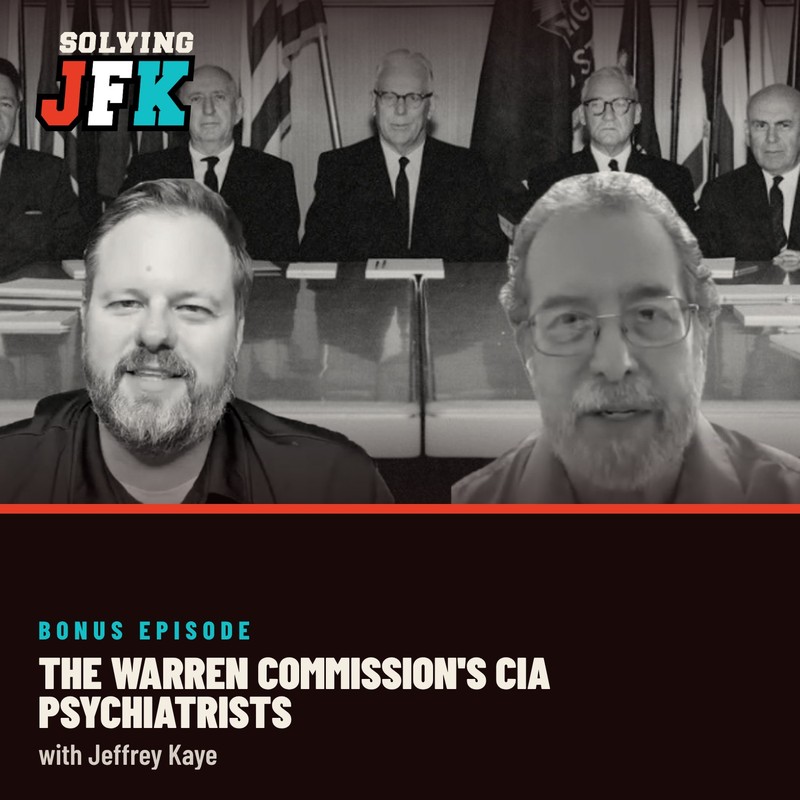
The Warren Commission's CIA Psychiatrists with Jeffrey Kaye
In this bonus episode, Matt sits down with psychologist and researcher, Jeff Kaye, author of the Substack Hidden Histories, to unpack his recent piece on a corner of the JFK story almost nobody talks about: the Warren Commission's CIA psychiatrists.
The Commission quietly hired a part time psychiatric consultant named Dr. Winfred Overholser to advise on Lee Harvey Oswald and Jack Ruby. On paper, Overholser was just the recently retired chief of D.C.'s St. Elizabeth's Hospital. Off paper, he chaired the OSS Truth Drug panel in WWII, supplied the "brainwashing" cover story that buried 25 U.S. officers' confessions to germ warfare in Korea, and ran a hospital with a formal CIA agreement that eventually let Agency staff (not doctors) commit people involuntarily to protect "sources and methods."
Automated transcript
Machine-generated from the audio and unedited, so names and spellings may be wrong. Tap a timestamp to play from that point.
Speaker 0Every JFK researcher worth their salt knows about Alan Dullis, John McCloy, and the long fingerprints of the CIA on the Warren Commission. But Jeff K's October 2024 piece at his substack hidden histories adds a layer that most of us have never heard. The Warren Commission quietly retained a part-time psychiatric consultant named Dr. Winfred Oberholzer and his successor, Dr. Dale Cameron, to advise on the mental life of Lee Harvey Oswald and Jack Ruby. On paper, overholzer was just the recently retired chief of DC's St. Elizabeth Hospital, but in reality, he had chaired the OSS Truth Drug Panel in World War II. He supplied the brainwashing cover story that helped Barry 25 US officers confessions about germ warfare in Korea, and ran a hospital that had a formal written agreement with the CIA's Office of Medical Services that allowed agency officials not doctors to involuntarily commit people for non-clinical reasons.
Speaker 0Now on solving JFK, What we did on episode 85 with Jolly West and Jack Ruby was to zoom in on one CIA connected psychiatrist getting close to one of the two men who could have blown the case open. I'm talking about when Jolly West met with Jack Ruby something we'll talk about a little more today, but what Jeff has found is that this wasn't just a one-off. There appears to be a deep bench of MK Ultra slash OSS era psychiatric professionals who were quietly embedded inside the official Warren Commission investigation. In this bonus episode, we're going to walk through Jeff's findings, his broader work on hidden U.S. history, how he reads Jolly West and what the overall implication is for the JFK story, And importantly, what would a loan gunman believe or say about this whole conversation coming up next on solving JFK?
Speaker 2In Dallas, Texas, three shots were fired at President Kennedy's motorcade in downtown Dallas. The first reports say that President Kennedy has been seriously wounded by this shooting. And then they have formally charged the assassination question. I get the hat of the president. The man is me, of course. It's also a fact in a moment. I was here about for a big spurs. The mission answers acted as a long-up-up-up-up. I don't know if you've got anything to say.
Speaker 0I get it, I get it, I get it, I get it, I get it, I get it, I get it, I get it, I get it, I get it, I get it, I get it, I get it, I get it, I get it, I get it, I get it, I get it, I get it, I get it, I get it, I get it, I get it, I get it, I get it, I get it, I get it, I get it, I get it, I get it, I get it, I get it, I get it, I get it, Yeah, it's a pleasure to have you on and your reputation procedure with your excellent hidden history. Substack. So I guess can you tell us a little bit about how you got started down this road of a parapolitics slash alternative history slash what I would say looking at the documents.
Speaker 1Right, right. Well, I was always interested in history. It was of my undergraduate was in history, but my career was in psychology. And I became a clinical psychologist and many years ago around the turn of the century, of 21st century, a colleague of mine recruited me to work at a torture treatment center in San Francisco, California. And that's doing evaluations in psychotherapy with torture victims who have come seeking political asylum to the United States and helping them with their psychological or psychiatric aspects of their case work with the government. and meant interviewing many, many dozens of torture victims, working with some of them a minority in psychotherapy, but really learning a lot about them. And it was, it was, while I was doing this, that in the aftermath of the Iraq War, a George W. Bush's invasion of Iraq that the news hit about US using torture in Iraq and of CIA black sites.
Speaker 1And then the news hit that these torture, program had been organized by psychologists. So myself and a number of other psychologists became much more involved politically, and I began to look into. Because I was curious the the documents because that was my background. If I was going to understand it, I you can't really trust secondary sources very well. And so it's best to get the documents is one thing I like about your shows you're always looking for the documents you're always looking. to substantiate the claims, and that's what I was seeking to do. So, well, you know, and one of those claims, which leads directly to overholcer, and that finding today was that, um, one of those claims was that the torture program was constructed on the basis of old Chinese. communist forms of interrogation and torture to elicit false confessions. And everyone agreed that this was at least everyone on the left.
Speaker 1But yes, this is exactly what's happening. This is the story. And I believe it too. But I, but something said, I'd like to see the confessions. I want to know what they actually said. It would be of interest to be. It might even help me in my work with torture victims and when I'm in court. I was an expert witness when the government, et cetera. And but then I couldn't find the confessions. They were nowhere to be found, nowhere in the United States. I had to go to Britain, and I don't mean I went there physically, but I contacted the Imperial War Museum in London, was able to get a copy that they had. And I learned about people like Colonel Frank Schwabel, who was the highest ranking Marine Corps prisoner in the Korean War, and his confessions about use of a biological warfare which he knew intimately because he was a staff on a man's staff from the Marine Corps. Anyway, after the war, Schwabel was brought up on charges or potential charges by the Marine Corps and the cover story was that his confessions of US use of biological warfare were in fact elicited by Chinese communist torture.
Speaker 1This is what I read in the New York Times one of the people who testified to that in court was a doctor went for it overholcer, the esteemed psychiatric expert, the superintendent of St. Elizabeth in Washington, DC. And that was just a fact that I kept in the back of my head. Wasn't, you know, that didn't say, oh, overholcer, I've got to look this guy up. In fact, I forgot about it. for some months, until one day I was pursuing a different matter and using the Mary Feral website and I came across overholsters name in connection with the Warren Commission. I saw how to do that. That's interesting. I never heard of that before overholstery. That brings the bell and I went back to my notes. I said, oh yeah, that's the guy who testified for Frank Schwabble that he was tortured, even though he wasn't, and I can tell you, I know that for a fact now. I discovered that this was a major cover-up that the United States Air Force and Marine Corps had told its top officials, its pilots and air crews who were working on the biological warfare program, that dropping the bombs, et cetera, on Korea and China, that if they were captured, they were to talk, they were to tell them everything they knew.
Speaker 1better to do that and be tortured. They figured, as they told the officers, the other side's going to know all the information anyway. And these were valuable assets of the military. They didn't want to see them destroyed in prison or whatever. And after the re-inward and the revelations of this came out cost a huge controversy in the press, that's how I discovered this. Anyway, it's in the pages of the New York Times. Later, it was all fleshed up. But for a little window of opportunity, say roughly in 1954, this news came out and then it was clamped down. You never heard about it again. Oh, that's an overholster. So then I said, overholster was hired by the warrant and mission. What's that about? And so I just proceeded to try and find the documents. It led me to make requests to the national archives for more documents and to do some internet slew thing. And that's what I came up with.
Speaker 0Okay. Well, let's tie that to that ties back to Jolly West to me, the Korean War Conversation. Oh yeah. Biological Warfare because Jolly West, really, he kind of got his start working with those folks, right? That had had come back. And there was some conversation about whether or not there actually was biological warfare, germ warfare, that's certainly disputed in historical taxes. Your research has shown that there in fact was. Is that correct?
Speaker 1Oh yes. In 2010, I could go into all the different reasons I believe that to be true. But in 2010, the CIA, on the 60th anniversary, the beginning of the communications intelligence or signals intelligence, decrypted messages from communists that is North Korean Chinese military units to other units or to headquarters about what was happening in their field of battle. And I found approximately 32 instances but which were came out in about 20 documents, in which the CIA declassified statements by the communist military units that they were being attacked by biological weapons and that they needed DDT or they wanted more vaccines so they wanted more instructions about what to do or they were wondering how we should address this. And in few cases, they were talking, but we have to watch out for false stories about this. We need to really investigate this well and not let false reports go out.
Speaker 1So this stuff was made as major. I mean, you don't get better documentation than this. And of course, American historians don't want to report it. And to this day, except with one exception, I'm about the only person to really report about this. So I'm more than, anyway, so yes, so Jolly West was interrogating, returning, as for others like Kai, he wasn't the only one, other, you know, playing picked psychiatrists and psychologists investigating, probing interrogating, the returning confessors of biological warfare, as well as other people who were deemed to be collaborating with their communist captors. So, Drawling Westy, whether he got his start exactly with that, certainly helped accelerate his career. And,
Speaker 0Right. And then he eventually was was working directly reporting directly to Sidney Gottlieb and had some correspondence with him to his other pen name Sherman Griffard, I believe. But so when Ruby meets with Jolly West, he then believe it or not, such a surprise has an acute psychotic break when the six psychiatrist who had seen him before all said he was Right. So yeah, that seemed, you know, the legal term for that is, is recipes a localter. It's the thing speaks for itself. If you know, if you have something where it's like, you know, the classic example is a fish in the milk. Well, there must have been a problem at the milk bottling factory because there's a village milk, right? So it's like, well, You've got the guy whose job it is to sort of melt people's minds going and he meets with Jack Ruby and sure enough the guy's mind is melted, absolutely.
Speaker 1That's what a coincidence.
Speaker 0Oh, look, we'll leave, but you know what I mean like.
Speaker 1Right, but I will say this though, the earlier psychiatric examinations of, in fact, one was by guy by the McManford Gottmacher who was it turned out referred with overholcer to the Warren Commission. but the Ruby people got him first. And he did an evaluation of Ruby in early January of 1964. And it was a highly condemned authority. And putting Ruby was a guy who could explode. He was very violent. So it wasn't, you know. What they were saying is that, yeah, he was saying from a legal standpoint, which later, of course, after his arrest, he was not or supposedly was not. And that from a legal standpoint, he was saying, You know, and that he had had a temporary kind of insanity, if you will, a kind of a epileptic Episode that they called it. And he was just so distraught and he killed Oswald. He was a spur of the moment impulse because he was a violent, impulsive man. So that's how they set him up.
Speaker 1Just as what I write about, just as the, the Warren Commission with the help of, you know CIA link doc psychiatrists in particular not overholster who had developed heart trouble and in fact was to soon die but overholster's successor Dr. Dale Cameron in another guy who had actually worked with mk ultra and the artichoke program of the CIA which was you know using drugs and hypnosis et cetera experiments on people there are the ones who came Oswald was trying to be a great man, Oswald was trying to be a, you know, masculine and relation to his wife and all of this stuff, but mainly they had been called in because they could be counted upon to rubber stamp, whatever the Warren commission and it's CIA backers, we're going to say about Oswald and it was, you know, so they, if you wanted to dependable people to do it, you would use government-linked psychiatrists and it's exactly what they did.
Speaker 1Unfortunately, no one's ever commented on this at all now.
Speaker 0It's kind of a main issue. Yeah, well, you know, your sub-stack article does a really nice job laying everything out. So let's get into, I guess before we pivot to talking about your work, just want to get your sort of summary, if you know, based on what you know, what do you think was going on with Jolly West and Jack Ruby? I mean, do you? Is that a coin toss for you? Do you lean one way or the other? I mean, it's easy to kind of make jokes about, but what is your, your pride?
Speaker 1Well, I first, I say that guy who's written a lot on this is Max Arvo, a research nerd. He had a lot of experience done at Kennedy's in King website and listeners should go see that, too. But my take is that, yeah, that, um, It's still a circumstantial case, there's no there's you know, but circumstantial cases can be actually quite powerful and quite strong sometimes you don't have a sign document, particularly when you're dealing with intelligence agencies, you know, you're not going to find, I don't think we'll ever find a document that says my name is, you know, Louis J. West and, you know, I drugged Jack Ruby gave him LSD made him insane and then framed him. You'll ever find that, but I think that is of something like that happened, and I don't know that it was LSD, but something, and they quieted him up and kept him in the hospital. And for as long as they could, or in jail rather, as long as they could.
Speaker 0Yeah, I tend to agree with you that it's unlikely that there would be a smoking gun document. And, you know, maybe there is a smoking gun document. And then, you know, 63 years later, 62 years later, it gets delivered to the Director of National Intelligence Office. And then apparently, you get back. That could be a thing that happens. I think we, It's healthy to have skepticism about any actors who are opining on this, and this is sort of a political football. The Kennedy assassination generally, you know, which kind of bad because it used to be something that was like American is apple pie. It was the thing everybody still agreed on was, well, I know, certainly Oswald didn't act alone to get it. There wasn't a lone gunman, everyone agreed. And now it's kind of, um, Yeah, and it was, you know, sort of a thing that was popular on the left for a while and now it's sort of sort of right coded to care about the JFK assassination and that the point is It's just an interesting time because there's all these different figures all over the place.
Speaker 0But, but it's really hard to know what to think about this whole thing with the Tulsi Gabbard and the whistleblower saying that the documents were taken and then it's like, well, then later they came out and said, well, that whistleblower is wrong, the CIA did retrieve the documents, but there wasn't a raid and then it's just, you know, it's hard to know what to think. I mean, and I'm sort of, I'll let you respond here. Sorry, I'm this month. Bye. I was so excited when the Trump gave his order that he was declassifying everything and it's been the most material declassification in a long time and it's a lot of stuff that has been helpful. Nevertheless, there are still more than a thousand documents or about a thousand documents that remain and you know we just we just need a lot of it's book record keeping or we're unclear on what even is out there. It's just kind of it's just a big mess but the point is it's
Speaker 0And we need our elected officials to help us get us to the goal line on just the disclosure, forget the investigation part. But what you're paying on all that sort of current events that's happening?
Speaker 1Well, you know, I, you know, my years, you know, her burning when I heard that a number of the documents that were requested were MK Ultra documents. Now, why would? You know, the investigation into JFK's assassination would be looking at MK Ultra Doc. So now, obviously, anyone who's followed and read all sorts of things on JFK's assassination has to have at some point come across things such as, well, Oswald was a program killer. Or, you know, he was a project monarch when he was, you know, 10 years old, and he was made to an assassin, you know, I don't believe any of that stuff. I don't necessarily disbelieve it, but there's no reason for me to believe it. But, on the other hand, here I am in their documentation. I see that an MKULE to a doctor was one of the main people who put in charge of constructing Oswell's biography. And I'm not talking about overholstery. I'm talking about Dr. Howard Brown, who was the President-elect of the American Psychiatric Association in 1964, when he was hired by the Warren Commission, to be one of three primary people, the other being Dale Cameron, overholzer successor and another guy from the federal prison system.
Speaker 1It's by the way, is where Edwin Walker, where he was working when Edwin General Edwin Walker was there for evaluations. I wonder about that, too. But that might take me further afield, and it's just a supposition. But what was Howard Rome doing this guy, and I put out in my article, people can read in 1955, eight years before the assassination had been, we have the documents of a very detailed visit by the CIA. our artichoke program people, which were, for your listeners, artichoke in MK Ultra, well, yes, technically, or different programs, there's a lot of overlap, and exactly what they were researching drugs and interrogation, how to, how to construct, how to white people's mind's clean, yes, how to program people as well, in trying to control them mind control. Well, what was one of the, you know, and this guy was, um, um, had also been at the same time, what was he doing working for the NSA, working with the CIA?
Speaker 1And here he is, right in the meeting with Alan Dullis in John McCloy and the staff members on Anjolai afternoon in Washington, D.C., to come up with what they're gonna say in the Warren Commission report about Lee Harvey Oswell's life and why he killed Kennedy. Is that the belief that they, they, you know, it's quite clear that that was the, you know, not only in the press, but in the more in-commission itself, for the most part, new exceptions, you know, they were going to follow out, they'd already made the decision it was as well. And they were going to back that. Although they had left some of them had left open things, so maybe had an accomplice, whatever. But you asked me about this. So, yeah, I think it's very suspicious that these documents were taking. It could be a misdirection. You know, Yes, there's a thousand documents or whatever that we're waiting to see, but the documents that I wrote on that you were speaking about here today about the CIA, linked psychiatrist working for the Warn Commission, they've sat there for literally decades, anyone could have looked at them.
Speaker 1about how they were being bombed by the United States with biological weapons. Those had set out there for a decade before I came across them, who's looking at, what are people doing? And I could come up with many, many other examples. Most of my writing comes from things. I wrote about MK Ultra. I gave a detailed example to a program they had called MKDQoy, which was kind of a subprogram of MK Ultra, in which The CIA was working on a device that would cause people to have concussions at a distance, you know, goof, you know, do something at you, and I give you a concussion or brain damage from a distance, that even touching you. It was, you know, the program was advanced enough at had its own code name, MKDQI. That information also had been sitting out there in CD-ROMs and online at places like the Black Vault for decades. You know, there's so much material out there to be still it to be looked at it's is I when I say misdirection I wonder are we waiting and are we seeking documents hoping for a smoking gun when reality may be the smoking gun or something like it is already sitting somewhere on a server just no one's ever looked at it.
Speaker 0Yeah, that's just like the routing of Oswald's CIA documents. The men that that was the story, you know, his, his document should have gone to the Soviet Russia division and they went to the office of security and no one's ever explained that and there's not really a good reason why, unless he was being used in a spy game and then the only argument, well, maybe he was unwitting, maybe he didn't know and got yada yada yada. your work. He was brought in first by John McCloy, and the way that he was brought in was a little confusing to me because McCloy, in by the way, McCloy, obviously he's a Warren commissioner, he was the chairman of the Ford Foundation, which they're kind of integrated And McCleus, the one that wanted to bring over Houser N, and at first it was to untangle the autopsy mess, as what he said. And specifically, he said that he wanted to ask to have overholes or address. why didn't they turn the body over and why did the FBI report come out with something that's not consistent with the autopsy.
Speaker 0And my biggest question was like, why are you going to bring in a psychiatrist to ask about a gunshot wound autopsy? I mean, you know, might as well ask a dentist or a podiatrist. I didn't understand. Can you unpack that?
Speaker 1Yes, yes, a subsequent research in my last article helped me with the timeline and it helps me understand what I think happened. Oberholster wasn't initially brought in by McLeod, at least he was brought in by another guy by the name of Thomas David Wads or whatever. The J. Lee Rankin in the first week or so, the formation of the Warrant Commission went to this guy who was a Rockefeller linked politician in Vermont and said, get me some referrals for we need, we want psyched people to help us out here. And the guy, this guy did, but was turned to a guy by the Vermont State Hospital named Dr. Rupert Shittick, who I lay out in my article, is linked at least possibly with MK Ultra work. And MK Ultra work definitely seems to have occurred at his hospital for Mont State Hospital during the period he was there. In any case, he's the one who recommended overholse her first. and he recommended this guy, Dr. Gottmacher.
Speaker 1I always pronounced mispronounce his name. Gottmacher, yeah. Who actually was already going to work with the Ruby Defense Team. And so overholzer. So what McCoy did though is the first time we see anyone turning to overholzer in the early stages in the war commission. Yes, and he wants to have overholzer look at the autopsy messes of McCoy puts it. But I think it's because they're used to overhaul through being a guy who they call on an expert, clean up their messes, to clean up the mess in the Korean with biological warfare stuff. There were other instances to clean up the mess around Walker. You know, he was supposed to also evaluate Edwin Walker, while he was held in the federal facility in Springfield, but Walker's attorneys didn't want him. They didn't trust him. You know, he just likes to commit people. They were worried that he was going to put something out and they'd put Walker away and never get to see him again.
Speaker 0But he was a government man.
Speaker 1He does their dirty work for them. And that's why I think McCoy said, let's get him because he has authority. He's decades of accomplishments. We'll work too, because they don't talk about the OSS truest rooms and stuff. But so I think that's what it was. But I think they, in the end, they dropped that because the same reason you just said, I don't think they probably said, you know, he's a psychiatrist. He's not a forensic. You know, pathologist, we better get somebody else to help us with this.
Speaker 0So not so he wasn't a subject matter expert. However, he was trusted for high stakes matters and known to be. Exactly. On that they would see things the same way as both.
Speaker 1Yeah. The highest stake matters. You don't get higher than covering up. super black operation like biological warfare. This guy was at the top. In fact, in the one commission, documents that I found, you know, Roe Warren is saying to the other committee members, oh, I, you, you were here. You congressional people who are part of this committee. I'm sure you know who Dr. Overholzer is. He needs no, you know, he needs no introduction. Yeah, because he, you know, he was the
Speaker 0And then his overholcers successors. So he passes away, you said a heart failure.
Speaker 1Yeah, 64.
Speaker 0We're sure that wasn't a heart attack gun.
Speaker 1I know I thought about it. But now I don't know why I can't see a reason why. I think he probably just really died of heart failure.
Speaker 0that happens sometimes. Sometimes it's not the heart attack gun, believe it or not, right? So anyway, overholster's successor at St. Elizabeth and also with Warren Commission, Dr. Dale Cameron. So in 1964, July of 64, he has this meeting with McClellan, Dullis, and some staffers, and that's where they work up Oswald's psychological profile. Yeah. This is the meeting if I'm not mistaken where they're basically like, well, if Marina were to just slept with them the night before, then maybe the maybe he wouldn't have killed Kennedy and who's just like so frustrated with his own wife and yada yada yada, it just it seemed absurd on its face. uh... and it's kind of the type of thing no disrespect personally but the type of thing the journal the prisoner brings up in his books is just like it's all about like the point is it's all about as well it's personality and as well subjective life not about like no doubt to like the objective and like what he's doing the people around him uh... opposed to the court's camera and he says this was what the war commission experts thought
Speaker 0Right, and I guess it's just I guess they didn't really run with that. You don't really hear people talk that use that line that much any more these days, but but I guess. Do you know what the was the thought probably initially that that was sort of the thing that they thought they were going to lead with it, were they just workshopping it or they were like, well, They were, yeah, they were really workshopping it.
Speaker 1They, you know, they knew what they were going to say in the same in the broad sense of the term, as well as was unstable. He had a troubled childhood. His mother was a monster. And they had all this kind of psychoanalytic stuff that he was really trying to think. He killed Kennedy because really hated his mother. And he identified with his mother with the US government and Russia. And it just all sorts of crazy stuff. And when you read all of it, it's mostly just psycho-babeled BS. And sometimes the Worm Commission staff, anyway, not so much McBoy or Dolas were there, don't, you know, they called them on their BS because they were there to kind of keep they were the legal minds and they were kind of, you know, I think, well, how can we write a good brief really is what they were thinking? The legal staff was approaching it in the mindset, I believe, that we're constructing a legal brief, you know, that's going to back our case.
Speaker 1and we don't want to have stuff in there that's just outlandish theorizing by some guy that yeah marina Oswald if she had slept with you they literally said if he had slept with lee that night lee would have slept in the next morning because he'd be so tired from the great sex and he would have missed being able to assassinate him the that's literally what they talked about but other man on doctor roamed it said oh no lee his problem was he was and the frustration of this built over the decades until finally anything was like a match waiting to you know, just touch it and explode and that's what happened with Kennedy, you know. Just in the end, they only say, they only kept one thing from this meeting, but it was an important thing. And that was Howard Rome, the MK Ultra Artichoke Specialist, who was on the Warren Commission, as a consultant and met with Dolas and McLeod at the Special Meeting, which was, by the way, a top secret meeting wasn't declassified for some years.
Speaker 1And said, you know, Lee Harvey Oswald wanted to be a great man, and that was how in history and killing Kennedy was how he was going to do it. He might have wanted to kill somebody else, maybe he wanted to kill Walker, But he didn't, and Kennedy would be his ticket to be in the quote, great man, you'll find later, quote it again and again. That was the CIA situation, that was it. The other stuff they just laid out there and let maybe people like Gerald Posner, other people take it up to sort of throw more mud on the wall and confuse things as much as they can. And they also made sure that these, Psychologists wouldn't throw any thing out there that would possibly clear Oswald or at least throw right out. Interestingly, by the way, Cameron was the only guy and everything I read who a couple of times said, well, you know, maybe Oswald was innocent, but then he'd say all this crazy stuff. Just the fact that he would even do, I guess he felt he had to at least make
Speaker 1He would say things like, oh, yeah, you know, by the way, and this literally is something like this is how it unfolded in the meeting. You'd say to Dolis and McCoy, you know, I never, you never let me, he was complaining. He was whining really. You never let me talk to Margarita Oswell. You never, I never got any details about what happened in Russia. I never got this or that about his military record. So I don't know what I'm really talking about here, but let me tell you what I think, and that he'd run down this whole thing about how Oswald's insane and it's mother created into a monster and these guys are good at covering their asses and BS and forensic settings. I've seen this in the real world too in court rooms get torture victims thrown out of the country. So it's the same kind of thing in my mind, except here it's working at a very high level to help cover up a major crime against the society.
Speaker 0Yeah, and then so the third a third person and there's I think more than maybe just these three, I think there's several of these CIA connected psychiatrist that you talk about, but Dr. Brent Wedge who. He was at Valley Ford Army Hospital during Project Artichoke experiments, the ones that on returning Korean War POWs, and he is going to visit with the warrant commission on January 29th, 1964 in the logbook. So do you know kind of what he was up to? And I guess it just shows that's one more person that has this connection between, you know, mind control, artichoke, MK Ultra style operations and showing up to advise a warrant commission.
Speaker 1Yes. Well, we know that he corresponded with overholster, but we don't know what they talked about. And if that exists anywhere, I haven't been able to find it either in overholsters, papers, or in the national archives, it may be there and I'm just not looking in the right spot. Maybe it's in one of those thousand documents that they have out there. I don't know, I wish I knew, because Brian Wedge is a very suspicious fellow. I think that my own personal take, I guess, educated guess, is that Wedge heard about what was happening and he wanted to get involved.
Speaker 2He's very, these people think very highly of themselves.
Speaker 1And this is going on and he calls his colleague over a right stone, overholzer, you know, because Bryant was, you know, as worked for the CIA and constructing biographies of foreign leaders, you know, for intelligence purposes, you know, at a distance, so they could better understand and supposedly do whatever shenanigans they wanted to do. And so he thought he was hot stuff. And I think, you know, he tried to get involved and for offered his services, perhaps to overholzer and therefore to the commission, and either they didn't take him up on it or they did. And I know when else is so far discovered exactly what he did.
Speaker 0Yeah. I want to talk about another document that you came across. And so, you know, when we think to movies and we think to like, you know, this whole thing of like the CIA and the national security state, they can do anything they want. And one of the things that you hear threatened is, hey, I'm going to throw you in an insane asylum. uh... and then you go this never really this is something that's in the movies but but prove to me that that happened somewhere and you know people go while you know that's the kind of thing that's hard to prove you came across the document in nineteen eighty memo uh... uh... cia memo on saying the list of us to basically said that there was an arrangement where they could uh... they could basically send anybody who was a problem for national security purposes or, you know, potentially exposing sources and methods, they could send them to St. Elizabeth and they would be dealt with as if they were insane.
Speaker 0And St. Elizabeth, what now is getting questions. That's That's huge.
Speaker 1Well, well, there were two things. One was there was the document that said, since 1959, we've had this formal relationship with the CIA on admitting people that they wanted admitted family members agents assets and quotes, you know, and then there was a later document. that went into greater detail about how this arrangement was something like a memorandum formalizing, this is my understanding of our agreement kind of banging. The agreement was that there was an ad hoc committee made up totally of just CIA people from the other office of medical services, the office of security, I'm not sure who else I'd have to look back and see, but It was like four or five different people in this ad hoc committee and it would decide if it would recommend who needed to be done and sometimes those referrals were just for purely security purposes not mental health. And yeah, saying Elizabeth wouldn't act, there was no medical you know, just on the CIA say so they would psychiatric really hospitalized somebody.
Speaker 1I tried to I reached and by the way, it wasn't just saying Elizabeth that was this was the second document included the veterans administration. So the sandalism was kind of sold, if you will, or trade it off from the federal government to the DC government some years ago. So I didn't bother to try and see what they had to say about Apple when they were under the Fed's, because it's a different administration.
Speaker 0But I did call contact the Veterans Administration to ask them the comment on this and just ask them if they still had an arrangement with the CIA.
Speaker 1Well, of course, they never returned Nick, my calls first of all, yeah, but yeah, it's shocking. I mean, it really is the level of, you know, I asked myself sometimes, so I think it's a historian, Al McCoy, Dr. McCoy, has studied a lot at the torture program and the MKU stuff, and he said, you know, really, you know, the psychological psychiatric establishment, particularly the psychological establishment, had been, completely subborn by the CIA during the early Cold War. And it is true that much of the large higher profile, psychiatric and psychological establishment had connections with the CIA. People who, it's quite shocking to me as a psychologist, is to find out that some of your quote heroes that, at least you were taught to believe and you're reading their stuff early on, You know, people like you, these names will mean nothing to most people. So people like Henry Murray or people like, um, Oh, gosh, I'm blanking on his name.
Speaker 1Anyway, a lot of famous electrical people and they had work. Not just people like Jolly West, but, but, uh, well, respect to people in the treatment community. Like it's like going out, psycho, uh, therapy had worked with, uh, the CIA, wittingly or unwittingly. And, you know, some of these people as I said, both overholcer and Howard Rome to key figures in my research were a presence of the American psychiatric association and these were major figures with the intelligence connections running America's psychiatric establishment.
Speaker 0Right, do you so in terms of like a parallel between the Korea Korean War Biological Warfare cover up and the psychiatric involvement on the Warren Commission, how how do those things align and it kind of sounds like I'm going to answer the question I just asked you based on what I think it kind of sounds like like what you've laid out, they just kind of all knew each other. It's the psychiatric establishment and they're just kind of, that's who's working with the CIA and so that relationship would continue forward to the next thing, which happened to be the Kennedy assassination. Is that right?
Speaker 1I don't know if it was the next thing. There were other things in between. But yeah, I mean, basically, you have these people and their positions of trust. And an example would be in 1946, I think it was. And we're not long after the end of the war. The daughter of the army's primary biological warfare, our chemical warfare, biological and chemical warfare service in Japan. Their main guy was stationed in Japan. His daughter was murdered and horrible murder. And they pretty much looked when I looked like the in overholster was involved with this too. They wanted the government wanted overholzer to come in and say how the guy was insane and stuff. The army was rushing this through so fast. They didn't want any publicity or anything. There wasn't time for him to get from DC. So overholzer didn't get his chance to hop into this month. But they did turn to him and they turned to other people.
Speaker 1So the idea is that they have a select group of people that they're trustworthy and that they know can handle whatever, you know, throw out a lot of BS, whatever the BS might be. And in this case, psychological, mumbo, jumbo stuff. Because, you know, the general population can't assess things like insimpy and epilopsy, like with Jack Ruby, or, you know, legal insanity versus whatever the population thinks is insanity. All these things, And you shove it through really quickly. And then what you're left with is the imprimatur of people with MDs and PhDs and professorships and Legion of Merit metals that are respected members of society and they're the ones who say what is. So that's the link here, I think. So you're speaking in a left-to-sense. You have a ruling class. And these are the higher echelon of the servants of the ruling class and the professional fields, who serve their government when they are called upon.
Speaker 1You know, they did it in World War II when it seemed noble and then they did it again a few years later and onward including in 1964 they did it again and I think they still continue to do.
Speaker 0Right and based on everything that I've studied You know, you're I find your work to to even to raise even further suspicions, right? Like it seems to confirm everything I've already seen, everything that I already thought, everything that's in Gerald McNight's book behind me and the great book on the work commission. But my question that just to sort of look at it from the other side, what would you say to somebody who goes, okay, everything you're saying is true. Good job. the implication for that is not I mean what do you say to someone who says look just what you said these people all knew each other so they called their friends merely calling their friends doesn't doesn't mean that the you know there's some conspiracy it might just mean that they were you know you know can you say that they weren't acting with complete propriety sure but that this meaningless for you know
Speaker 1Well, I say there's a possibility and I even address that in the towards the close of one of the articles that yeah, I mean if you have a group of people and they're well connected and their friends are well connected. It's like a click and you know this click is the one who gets called upon and they do all their friends, they do the forensic psychiatric work and in truth they did know each other many of them for over the years some in some cases you know they knew each other well socially as well. You have to start putting a lot of coincidences together until finally the probabilities start to become a problem at it. Why were the meetings of Rome, David Rothstein, and Dale Cameron with Alan Dawes and John McCoy made to be top secret? Why weren't they just declassipated? Why weren't they just released when the Warren Commission results were released? What was the need to cover them up? Um, you know, that would be one question.
Speaker 1I mean, you're crossing Y pick top level people who were involved. I don't know, I'd have to sit actually and make a case as to all of this. It just seems to me there's too many coincidences, um, right, you know, to be, you know, why, you know, so for instance, I was hoping when I was looking, I had no idea what to look for when I was trying to track down who recommended, You know, these psychiatrists to the Warren Commission. And when I found out was a guy, Thomas, this Vermont attorney, I said, OK, well, let's see. Let's read the letter I got up in the National Archives that he sent to J. Lee Rankin, giving his testimony as to who was required. So who does he get their information from? He gets it from his NMK, Alfred Dr. Rupert Shik. from the Vermont State Hospital. And I laid out all the case about Rupert Chittic and who he is in my article, I can't repeat it all here. But that's another coincidence, right?
Speaker 1And who does he recommend? When Frit overholster, major health, and so yeah, maybe they knew each other. Actually, I don't think that Chittic knew overholster at all, I think that he just knew of him. But I think anyway, just,
Speaker 0That gets at a concept that I talk about some time which is coincidence threshold. Like, how many coincidences, because coincidences happen, certainly. But I think people who are on the Oswald did it alongside, they're real quick to go. Coincidence, coincidence, coincidence. But I mean, it's just they kind of pile up
Speaker 1And then you go, this is I'm looking at a page of 900 coincidences, all of which I have citations to the official record for, you know, like, so that's kind of, that's kind of here, here's some of my training can help a little bit in the world of psychology studies statistics and when you look at statistics, you know, they're all sorts of psychological studies and nothing they're trying to do is they're saying, just the fact that let's say, you know, people who drink a gallon of water a day, or have clearer minds than people who don't. Anyway, so you would run some tests, and then there would be the group that does and the group that doesn't, and there would be the probabilities involved. But the more you start adding in questions, the more probabilities start piling on each other, the more the possibilities become very, very strange. So for instance, If you have A, B, and C, I hope this isn't too technical.
Speaker 1If you have A, B, and C, coincidences. What's the probability that they are all coincidences? Well, you multiply A times B times C. You don't add them. You multiply them. And now you end up saying, well, if the probability of the first was Well, let's say, you know, three out of ten and the probability of the second was one out of ten and the probability of the last was eight out of ten. Well, then you would take those percentages and multiply them of what you end up coming up with after a while is a very tiny figure. You know, well, the probability of all of them being true, even though coincidence, are as infinitesimal. And that's what I think you have here. So instead you have a in psychology, they have the standard of either one in a hundred or five in a hundred is being is something that's due to something real happening versus a coincidence, you know, when you pile up all these coincidences and say, well, they're all coincidences, then you have to assume that everything is, you know, that almost nothing is possible.
Speaker 0And every there can be a coincidence for that matter.
Speaker 1I think that it means that we're going to overlook a lot of stuff. And why the secrecy, again, my main question back is them, okay, the why the secrecy, if everything is so clear and simple, you know, why do they have to go out of their way to construct, you know, you know, some kind of a demonizing portrayal of Lee Harvey Oswald when they didn't even have the data to do it. They admitted they didn't, and yet they did it anyway, right?
Speaker 0read your work through through the lens of thinking about LBJ and Hoover's conversation, the day after this happening, where Hoover and I talk about this all the time, so people who listen to all of the episodes are probably tired of me talking about this, but this is sort of my LBJ hears from who for the day for the assassination. Hey, Oswald's down there talking to this, uh, there's an Oswald imposter at the Soviet embassy in Mexico City, and then Hoover follows it up with a memo or the White House memo to the secret service. No one, no one ever. walks this back, you know, Hoover never goes, my bad. We were wrong. I was mistaken, right? But then LBJ uses his conversation with Hoover in a, we know from a famously recorded conversation with Senator Richard Russell, where he's referencing the conversation that he had with Earl Warren and how he made him cry because he said he brought up a little incident in Mexico City that
Speaker 0Oswald supposedly meeting with the head of assassinations, Costa Cove, and Mexico City, you know, in September. Well, we know from the written record, and by the way, it's a whole separate story in terms of words, the tape, and it was erased intentionally. We do know. But but anyway, the written transcript says that it wasn't Oswald there, but then LBGA turns around and uses that. So, that whole idea is hard to not look at the official investigation and to look at for example I've reached got done covering the Soviet Union on solving JFK and one of the things in this originally released Russian document dump was notes that the Soviet UN ambassador had He wrote a memo back to Moscow right after hanging out with McClellan at a cocktail party And McClellan says to him he goes, hey, I don't know who's who went up to who first, but basically He asked McClellan, hey, how's it going? And McClellan goes, oh, I was well back to the loan.
Speaker 0He definitely killed him and then McClellan kind of says to him But you understand that that really you guys probably did it uh and it looks bad so uh and then when the Soviet ambassador was like I don't know what you're talking about he's like so anyway yeah I was well did it like I said I was well did it I say that to say That's a long way of getting to we see all of these psychiatrists who are trusted psychiatrists, meaning you know they're not going to freak out. They're not going to go rogue. That's the main headline is they're not going to go rogue and they have the institutional stamp that that's going to give them the credibility that you need. And look, maybe, maybe they literally were all patriots. And certainly, we know that they were because they're covering up war crimes, some of them, right? And the point is, could they, I guess, what is your take on, is it possible that they were told, hey, the Soviets did it?
Speaker 0We got to point this tour, we got to pin it on Oswald alone because if we go down that road, basically, that the war in commission believed what Johnson was telling them, and not all, and not dullists, and probably Ford, but certainly the war in, I would say, like who seemed to be the most gullible of all, sadly. Oh, maybe he was.
Speaker 1Right, right.
Speaker 0But anyway, what's your take on that, that whole possibility that, you know, hey, maybe these guys were just going along because they thought that it was, you know, a conspiracy, but it was the Soviets.
Speaker 1Yeah. I listened to those episodes for years by fascinating stuff on the Soviet Union release. I'm not in the Russian release, I guess not in the Soviet Union anymore. But yeah, did they, you know, people like Rome and Cameron or overholzer, you know, I, these things, these people I as I see them had sold their soul to the double years before. I think that you didn't need to say anything to them all you had to do is, you know, their careerists and they were, they really looked, they really brown knows the government people. They, you know, and that doesn't mean they didn't hear stuff while they were in, you know, or they didn't pick something up along the way. But I don't think that it would have been, I think they would have done what they did anyway. I don't think they needed that motivation, not these guys. These guys were made, most of them. They were made men in the apparatus of, when you're letting people be psychiatrically and voluntarily hospitalized in your facility, for which you have primary responsibility,
Speaker 1that there's nothing necessarily medical about it. And you're letting a police or intelligence agency like the CIA do that, you're at made guy. You don't need them to come to you and say, do this or the so if you're going to have World War III. That's what I think, but it doesn't, I could be wrong, we just, I'd be way have to see the evidence. I'd have to see something pointing in that direction.
Speaker 0Yeah, no, you mean it's a really good point because I was thinking just in terms of like, how they had the institutional connection, but, but then to think through, well, what are they doing exactly what what is the string is flowing all together, it's like, oh, doing, doing experiments on people against their will without their knowledge, like that's that's bad guy, that's bad guy behavior, for sure.
Speaker 1For instance, this guy Harold Rome, if you read my article or you read the link documents about the 1955 visit of the CIA to the Mayo Clinic where Rome worked and the University of Minnesota where he was a professor, you know, and the reports by a CIA guy, he's writing down this is what Rome told me, this is what we said, what we talked about, and other doctors as well. But Rome is saying, hey, if you heard about this guy Donald Hab, he's doing great work isolation and sensory deprivation. You could use that to interrogate people. And then later in the conversation, you know, he's so enthusiastic about helping the government. He says, well, wait a minute, you've said a few things here. We could never experiment on our own patients. We're healers here. We don't do that, but if you have other people not our patients who you need our expertise and you have unwitting or you have resistant experimentes and you want to do their stuff, we'll help you on that.
Speaker 1We'll help the government, just not our own patients because I have ethics, don't I?
Speaker 0I'm going across.
Speaker 1That's how they saw it. That's how they, you know, people with jolly west others, you know, they're ethical souls were gone, early on or they wouldn't have, they would never have risen as high as they did, I believe. Yeah. It wouldn't have had the trust, the CIA and the other, not just the CIA, I think militia might say CIA. I included your military intelligence. who obviously was involved somehow also. Yeah, I believe.
Speaker 0I guess just to sort of tie a bow on our conversation. I mean, the big thing that is interesting is that all of the doctors that were, all the psychiatrists that were relied upon by the Warren Commission actually had a long history with the CIA going back to OSS and also artichoke and MK Ultra. Maybe not all. Maybe that's not correct. Oh, but one. Okay. Yeah. And key. The key one. So yeah, basically all. And I guess The reason that matters is because it's not the objective report that we're told we were getting and also it's kind of the opposite. It's a conflict of interest. So it actually matters a lot. It's my perspective on that. But what do you think?
Speaker 1Yeah, absolutely. People like Dolis, by the way, sitting there in the room with people like Howard Rome and Cameron. He knew who they were. they had anything I'll indulist knew exactly what the links were. Nothing was said, and McLeod too, he may have known as well. I mean, McLeod, I put right up there just as high as dollars. I know people see dollars as the main villain. But I think both of them, McLeod's intelligence connections were just as tight and good as Alan dollars'. And he done, and he was a very nasty man, John. guy who was your listeners may not know is the guy primarily responsible for the internment of the Japanese and both were to for letting Nazi work criminals get out of jail early after the Nuremberg trials. I mean this was guy it was an nasty man.
Speaker 0Very powerful guy. The session is that he vigorously defended. I know the Japanese internment.
Speaker 1Oh yeah.
Speaker 0So yeah, so some great work on that and what do you have, you started to talk about your project you're working right now with the the Japanese bio.
Speaker 1Yeah, well another thing that was I found and you know, document that had been sitting out there once again, unremarked as I found more than one was a document that said that the You remember when the Chinese balloon flew over the United States and there was a big public balloon? Yeah, this was a copy started. I said, well, you know, some news story or something and said, yeah, I reminded people of when the Japanese at the end of course, towards the end of World War II sent balloons with incendiary bonds over the United States and Canada draw, you know, to which was an amazing, and actually a few people were killed in Oregon. So I started looking into it and one thing it did by the way is it took out some power lines to the Hanford complex of the Manhattan Project in temporarily very temporarily slowed down the construction of plutonium at the Hanford complex for the making of the bomb that would drop on Nagasaki.
Speaker 1Certainly this comes up in terms of the Korean War controversy over biological warfare because the communist claimed that the US was working with units 731 personnel in doing this. Of course, at the time the United States deny there was even such a thing as units 731 or that the incident that there had ever been a deal made. Those things were kept secret for 40 years. So anyway, I'm working on now is just a continuation The story goes that the United States gave Amnesty to the Japanese biological warfare scientists because so that they could get their data for using their own biological warfare program and keep it out of the hands of the Soviets. But, and I like to look at little things little threads that no one notices and no one's pulled them and so I think I'll pull. see what comes out. In this case, there was a little thread in the document saying that a copy, you know, that the records of the biological warfare program had been destroyed in the fire bombing of Tokyo, one of the fire bombing attacks, namely the night of April 13, 14, 1945, and they bond the army medical college and all the records of the biological warfare research went up in flames.
Speaker 1But it turned out that that was true, but what they didn't tell you was a copy of those records have been made. He didn't ship it off to another city called Niigata on the west coast of Japan. And I saw that there, so I started looking for information getting freedom of information with the National Archives. And I got a statement from at the time contemporaneous from Army investigator, Dr. Murray Sanders about how they had found the records, the copy of the records, and you got in, they were going to send them back and have them translated, and then they would really know what was going on with the Japanese. But this was before the offers of Amnesty. This was before, even while the Japanese were denying experiments and everything. So actually there were, so in other words, the Americans had this information before the Amnesty was even made. or at least they had the bulk of it. And I think they went ahead and made the amnesty anyway because they could never be sure at that point.
Speaker 1But whatever happened at my point, what happened to that archive? Just disappears into history to the vaults of the darkest corridors of government secrecy. I don't know, but no one's ever written about it. So I'm writing about it. And as I will see where that goes.
Speaker 0Well, good. Well, hey, it's it's been great talking to you and you were everyone needs to go check out Jeff's sub stack. It's at kj dot sub set dot sub stack dot com k a y e j dot sub stack dot com and he's got a lot of great articles there definitely definitely go check him out and support Jeff solving JFK listeners will be back with one more bonus episode before I go on a little hiatus. I've got Andrew Eiler and Mark Damsick, JFK Records Act attorneys and experts on that topic good friends of mine as well and they just got back from the National Archives with a crew of serious JFK assassination researchers so we'll be talking to them about their findings and also the current state of the JFK assassination records and after that, I'm going to be taking a break until about November to read research and outline before embarking on the final stretch of Season 3 of Solving JFK where we're going to get to covering Cuba, Cuba next-size, the CIA, and the generals.
Speaker 0And I'm looking forward to digging in and reading again and listening, instead of writing and talking and speaking all the time. So that'll be a good season and I'll come back ready to go. But once again, thank you, Jeff Kay, for your time. You're awesome and appreciate your work on this topic. And many other ones that matter for people who value freedom and honesty and transparency from their government.
Speaker 1Thank you very much, Man, for having me.
Listen without commercials, and get the bonus episodes
Supporters get every episode ad-free at listen.solvingjfkpodcast.com, the bonus interviews, and the community.
$3a month
- Commercial-free versions of all 139 episodes
- Bonus episodes and interviews
- Supporter community